Custom
Custom thin-section ball bearings
Thin-section ball bearings made to a drawing or a sample. This is wider than the inch equal-section line, and it is not a shelf of interchangeable part numbers.
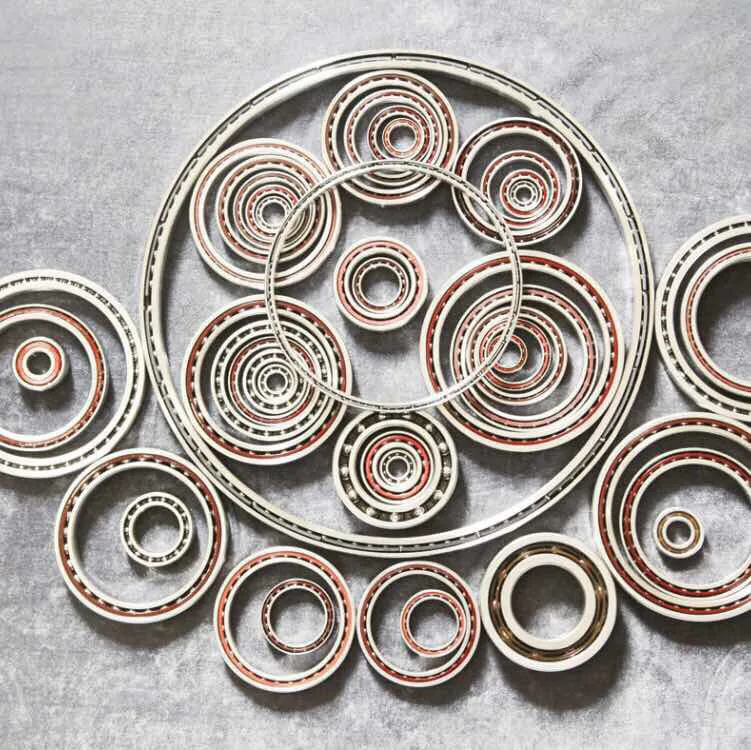
Made to your drawing
Thin-section ball bearings are made to a drawing or a sample, in standard and non-standard sections. More than 100 specifications have been supplied. That is past work, not a size list you can order from.
Uses include aerospace equipment and other advanced machinery. No program, vehicle, or customer is named, and no flight approval is included.
There is no cross-reference to another maker’s series. A thin-section part number from another brand is not evidence of a Zhongyue equivalent. Send the drawing.
| Published point | Reading |
|---|---|
| How to order | Drawing or sample. Not a posted stock list. |
| Scope Zhongyue states | More than 100 specifications, standard and non-standard, already supplied |
| Applications stated | Aerospace and other advanced equipment, with no program named |
| Interchange | Not published. Do not assume another brand’s number. |
| Inch equal-section line | A narrower page of its own, linked below. Its development envelope is not copied onto every custom section. |
Product photographs
Why a thin ring is a different design problem
A thin-section ball bearing puts a large bore in a small radial section, so the ring has little stiffness of its own. It becomes round if the housing and the shaft are round, and it becomes oval if they are not. Load, torque, and life then follow the housing more than they follow the bearing’s free geometry. A drawing that only copies a bore and an outside diameter, and says nothing about the housing roundness and the shoulder, is not yet a bearing specification.
Buyers usually need one of three ball-bearing ideas, and sometimes a crossed-roller relative that is not a ball bearing at all. A radial thin-section bearing takes load across the shaft. An angular-contact section takes thrust in one direction and is used in pairs. A four-point section takes reversing thrust and a moment in one ring, and it is sensitive to how heavily it is radially loaded while it does so. Zhongyue’s custom page does not list these types. They are the choices a drawing may call for. They are not a stock menu, and the crossed-roller constructions described on the inch page are not automatically part of this ball-bearing category.
Equal section, where the cross-section stays constant as the bore grows, is the idea behind the inch series. That series has its own page, including a development envelope Zhongyue has described for it. Custom work on this page also includes metric sizes and sections that are not constant. Do not take the inch envelope and apply it to a one-off drawing.
Seals, a preload, and a cage material are all open. A seal keeps contamination out and adds torque and heat. A preload removes play and consumes speed. Neither is printed as a default.
Inch series and other sections
If the part is an inch equal-section bearing, start on the inch equal-section thin-section page and send the section series and the bore. That page is the subcategory. This page is the broader custom ball-bearing work.
For anything else, send the drawing or the sample: bore, outside diameter, width, ball type if you know it (radial, angular-contact, four-point), the load, the speed, the housing material, and whether a mating brand’s number is only a clue. There is no interchange chart. Whether the part can be made is confirmed from the drawing.
Aerospace use, as Zhongyue states it, does not carry a flight approval, a cleanliness code, or a traceability level. If you need those, they are requirements in the inquiry, not features of this page.
Installing a ring that will copy the housing
Measure the housing before you blame the bearing. An out-of-round bore prints itself onto a thin outer ring, and the torque then rises at two points per revolution. Correcting that with a heavier preload hides the housing error until the bearing runs hot.
Press the outer ring in evenly, around the face, with a shoulder that is itself square. A point load on a thin ring dents it. The same rule applies to the shaft and the inner ring.
Do not clamp a thin-section bearing by a cover that bridges an unsupported gap. The cover becomes part of the structure, and the ring distorts when the bolts are tightened.
Keep the sample if you send one. A “more than 100 specifications” history is not a promise that the next sample matches a previous job. Each drawing is confirmed.
What to send with the inquiry
Write to jin@luoyangsongju.com with the duty and the bearing you need matched.
jin@luoyangsongju.com- ▸Drawing or sample, with bore, outside diameter, and width
- ▸Radial, angular-contact, or four-point, if you know which
- ▸Load, speed, and whether the load reverses or includes a moment
- ▸Housing material and how round the bore is held
- ▸Seals, preload, and any cleanliness or traceability requirement
- ▸A statement that another brand’s number is a clue only, not a demanded equivalent
Questions before you enquire
Can I order from a published size list?
No. They are made to a drawing or a sample. More than 100 specifications have been supplied, which is past work, not a size list.
Will you match another maker’s thin-section number?
No. Send the drawing. Another maker’s number is only a clue, not an equivalent part.
Is the inch equal-section page included here?
It stays separate. That page is the inch, constant-section subcategory, with its own development note. This page is the wider custom ball-bearing work.
Does “aerospace” on the source page mean a flight approval?
No. It is Zhongyue’s statement of where such bearings are used. No program is named, and no approval is implied.
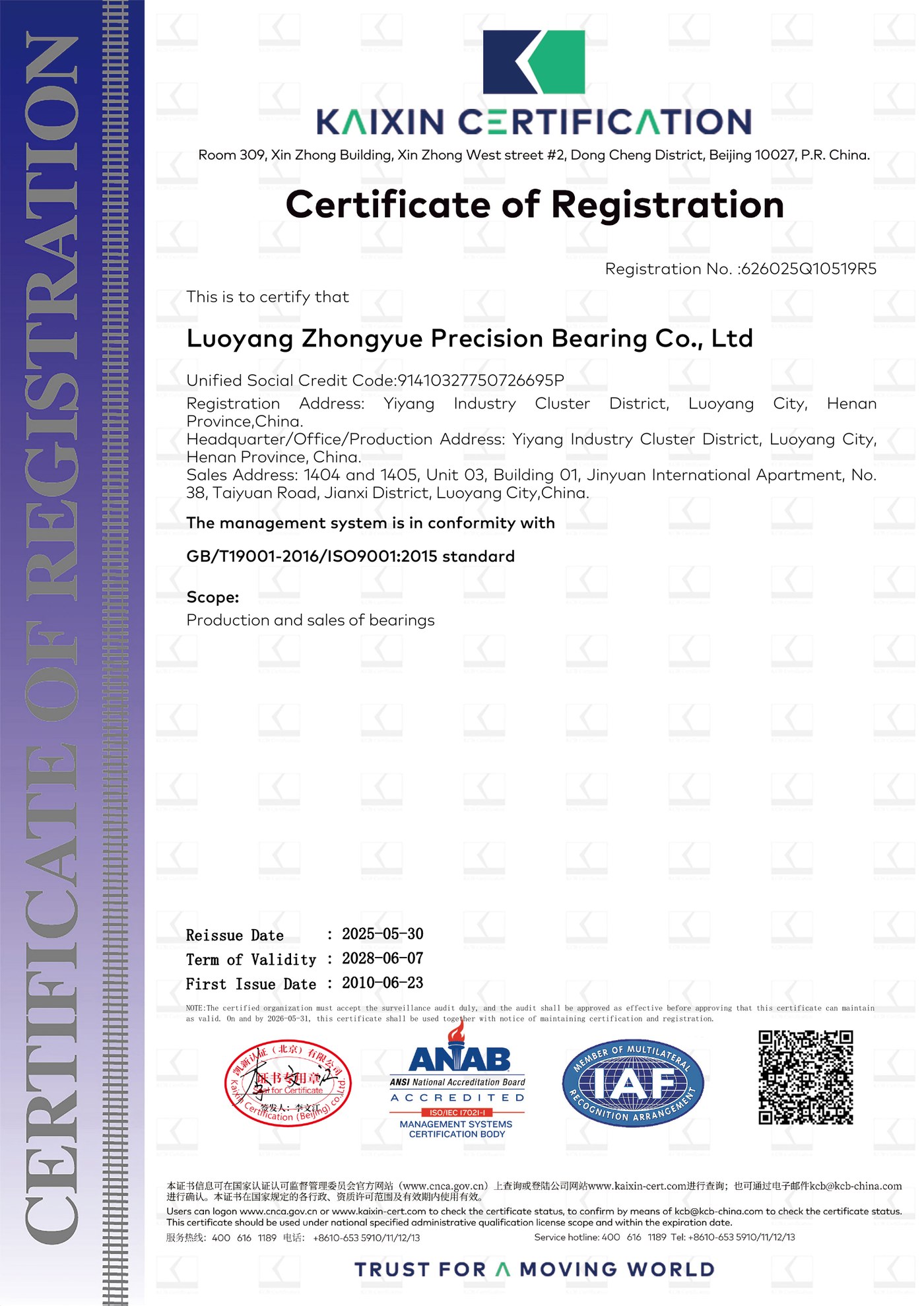
Manufacturer quality certificate
Zhongyue’s quality management system is certified to GB/T 19001-2016 / ISO 9001:2015 for the production and sales of bearings. The certificate is held by Luoyang Zhongyue Precision Bearing Co., Ltd. Confirm current validity with the certification body.
- Holder
- Luoyang Zhongyue Precision Bearing Co., Ltd.
- Standard
- GB/T 19001-2016 / ISO 9001:2015
- Registration no.
- 626025Q10519R5
- Issuer
- Kaixin Certification (Beijing) Co., Ltd.
- First issue
- 23 June 2010
- Reissue / valid through
- 30 May 2025 / 7 June 2028
- Scope
- Production and sales of bearings
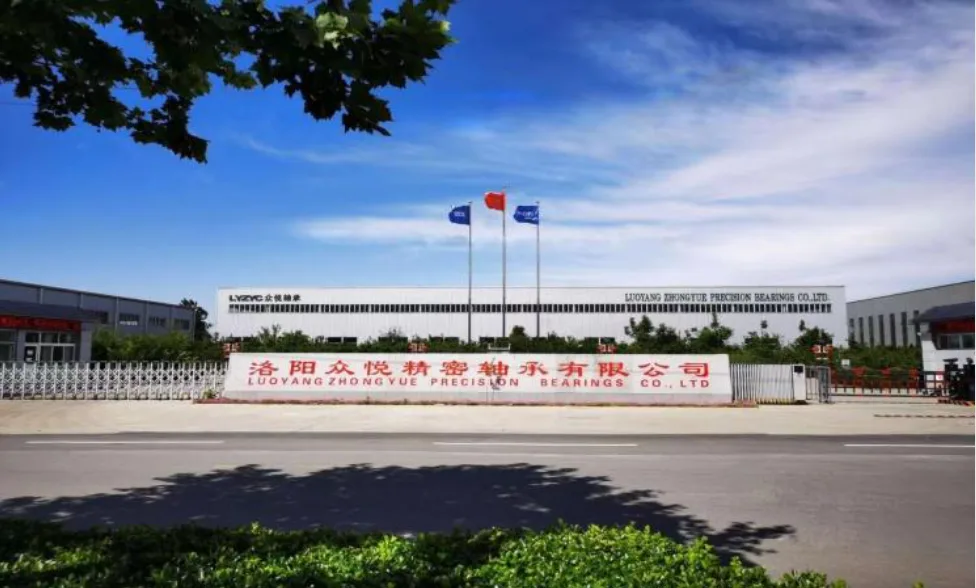
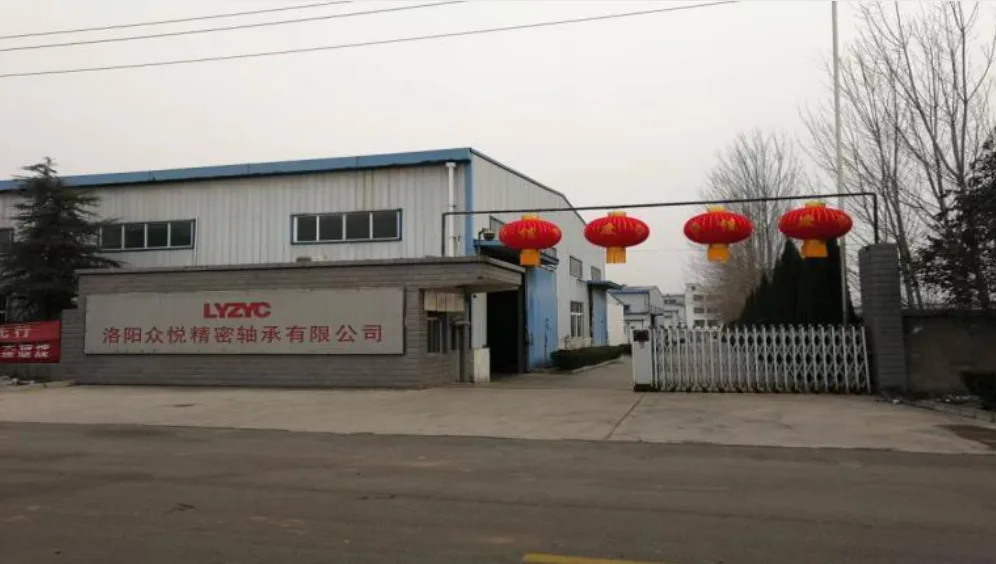
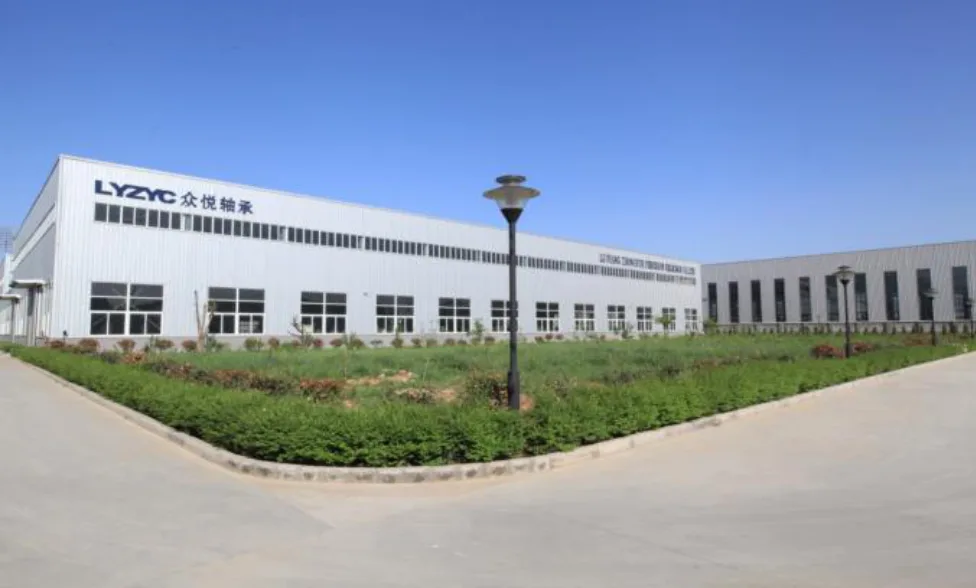
The Zhongyue plant
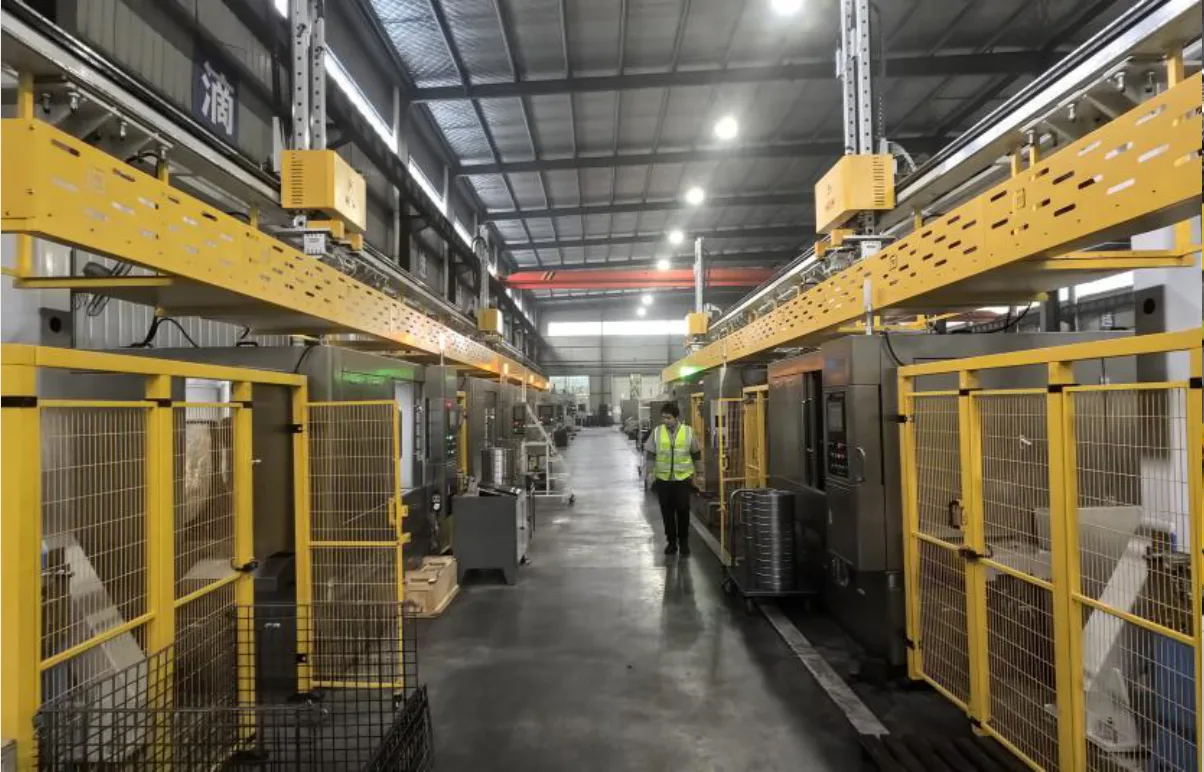
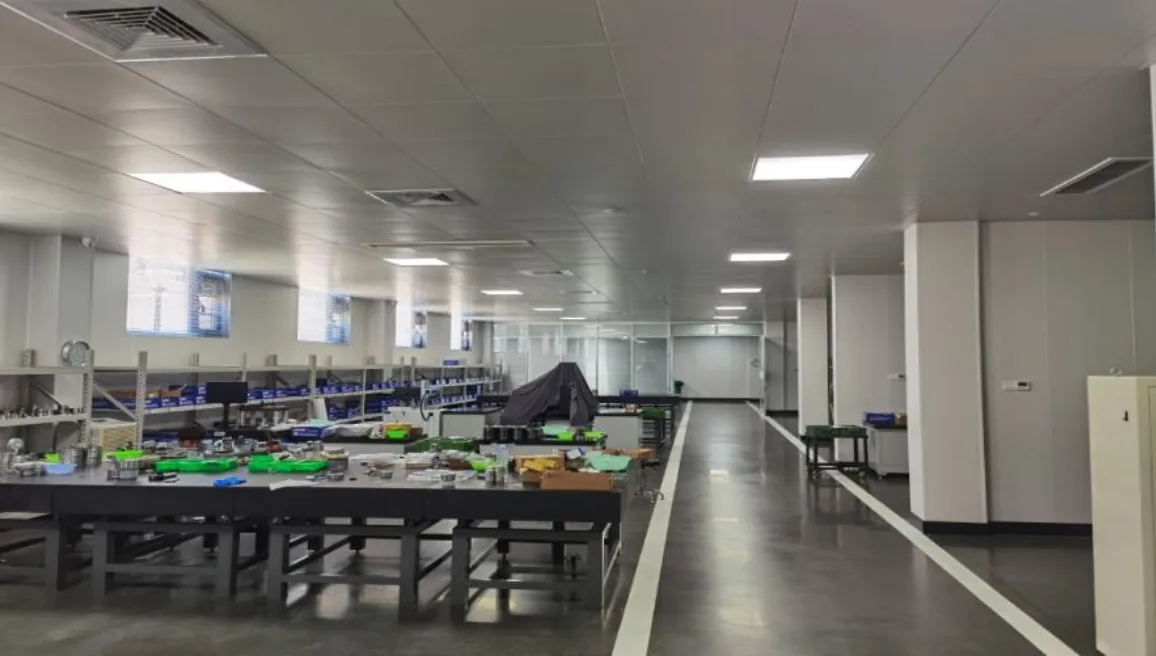
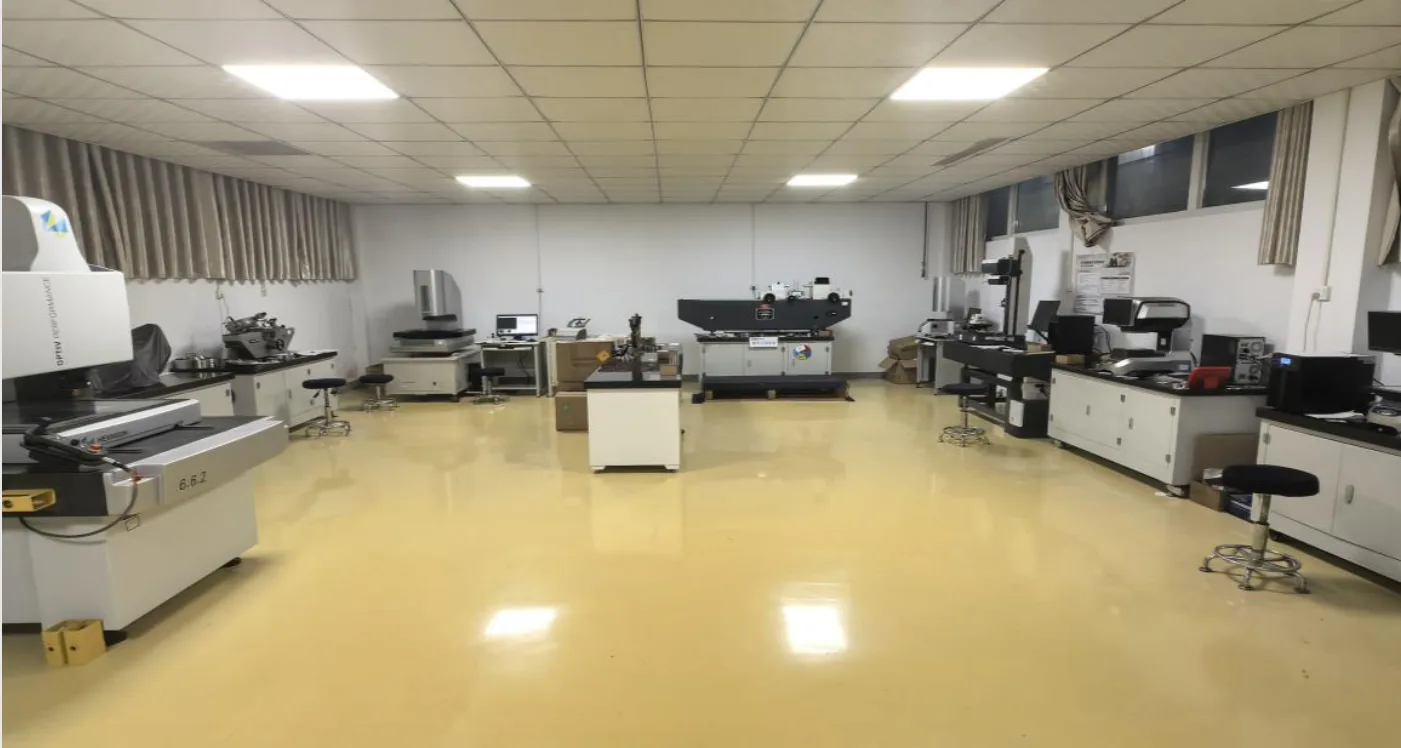
Zhongyue runs two campuses, over 46,000 m² in total, with 30,000+ m² of workshops and offices, 150+ people, 400+ bearing machines, and 500+ inspection instruments.

Machines, metrology, and materials
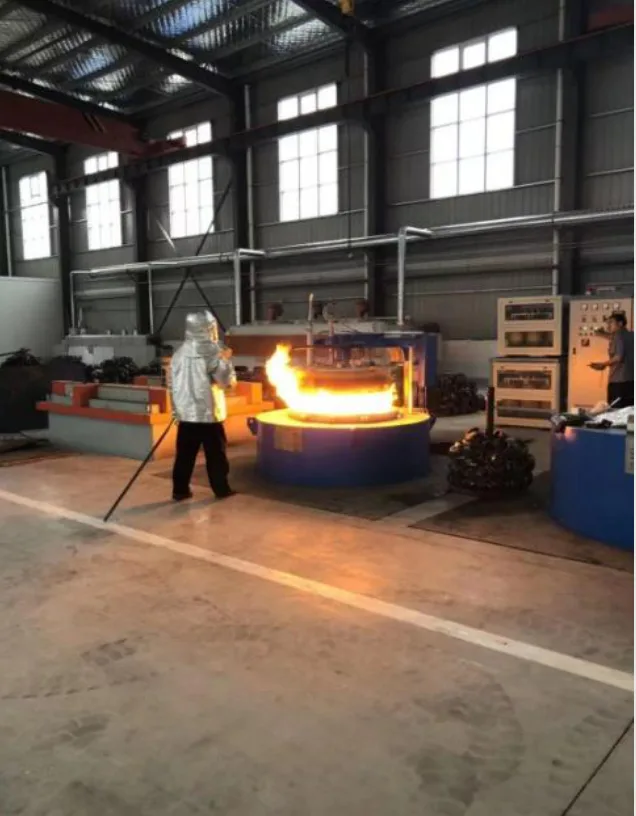
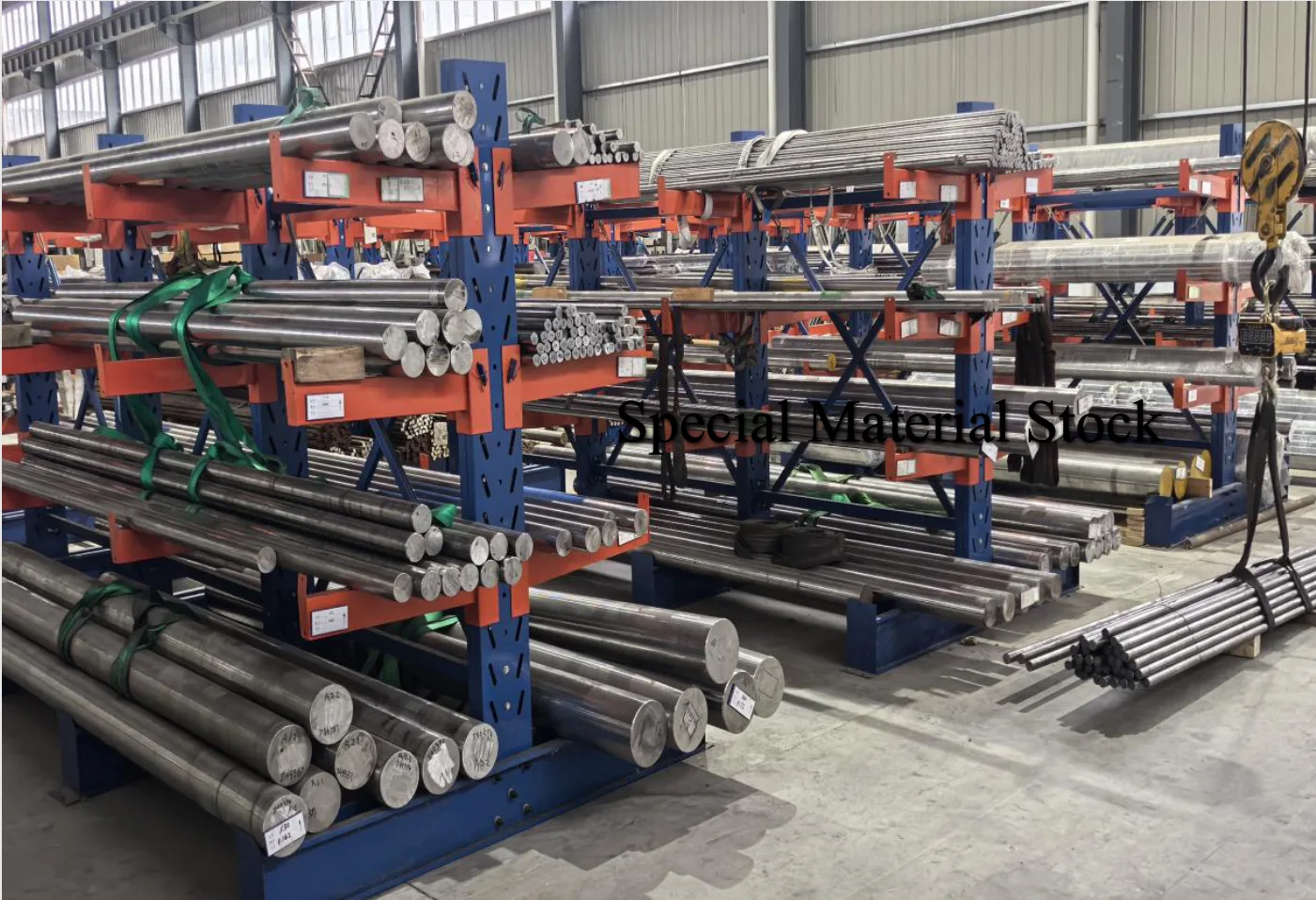
Special-material stock includes bearing steel ZGCr15, stainless 9Cr18 and 9Cr18Mo, high-nitrogen stainless X30 and X40N, and high-temperature steel M50. Heat treatment includes vacuum quenching and a cryogenic treatment step at −196°C. That step is part of manufacture, not a running-temperature rating.