Precision Grinding
Spindles
8 Models | 1.5-32kW | Up to 45,000 RPM | External & Internal Types
Ultra-precision grinding spindles for surface, cylindrical, and internal grinding operations. Engineered with P4/P2 grade bearings and G0.4 balanced rotors to deliver sub-micron runout accuracy for the finest surface finishes.
External & Universal Grinding — 3 Models
Purpose-built external grinding spindles for cylindrical grinding of shafts, rolls, and rotating components. High stiffness for heavy stock removal with superior roundness and straightness. All three models feature synchronous motors and large wheel capacity up to 600mm for the most demanding external grinding operations.
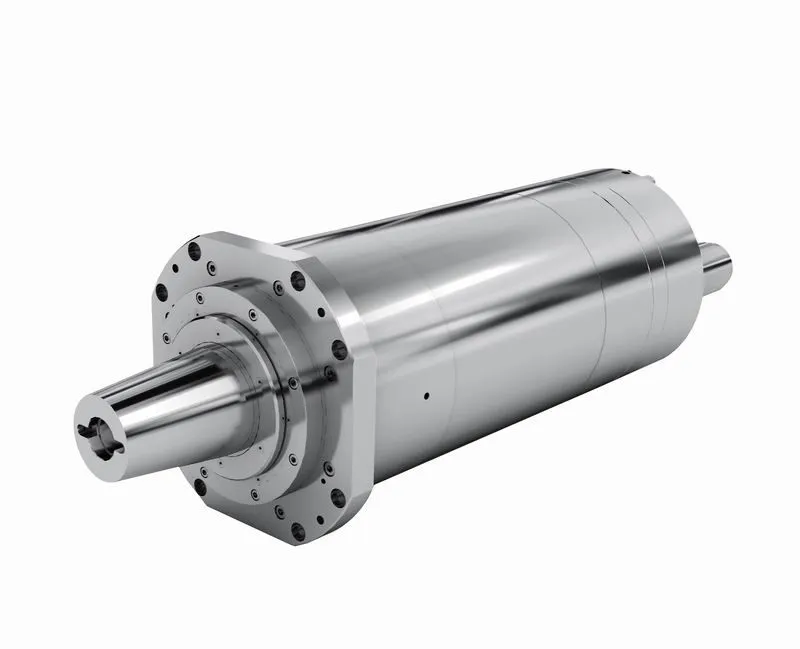
250MD06G32
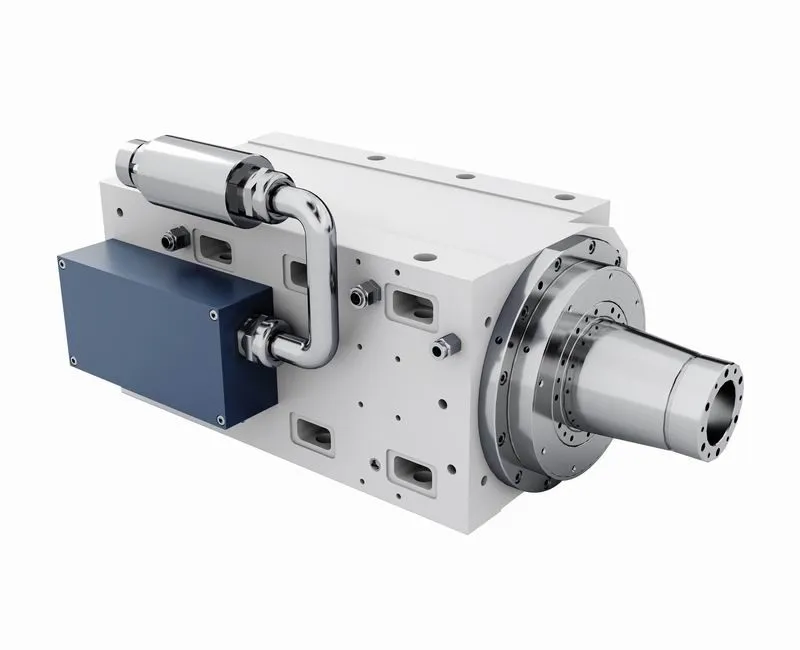
170MD05G14B
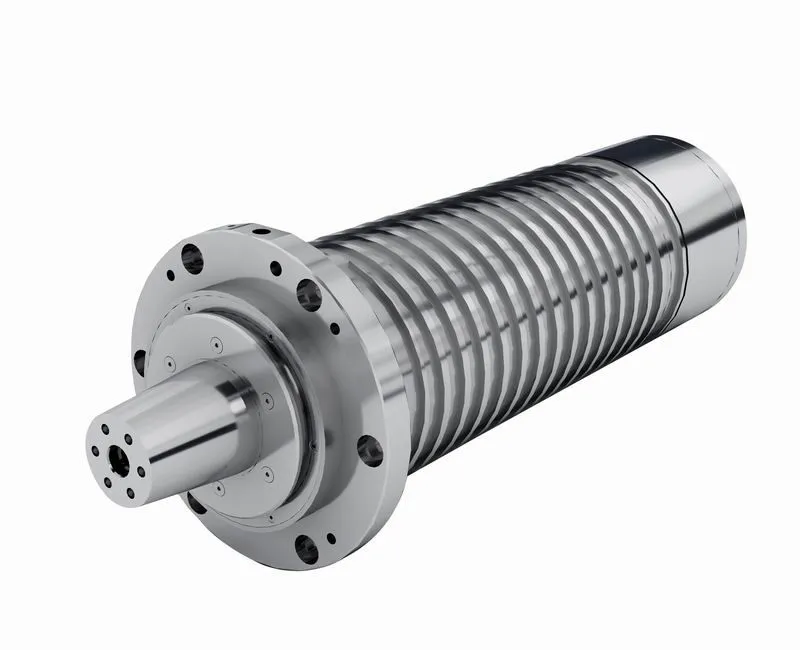
155MD06G19
Internal & Universal Grinding — 5 Models
Comprehensive range of internal and universal grinding spindles for bore grinding, raceway grinding, micro-hole finishing, and specialized applications. Speeds from 6,000 to 120,000 RPM across 5 models including high-frequency, belt-driven, and synchronous motor types. Oil-air micro-lubrication standard on all high-speed models. HC63/HC80 hybrid grinding/milling spindles included for versatile grinding and light machining operations.
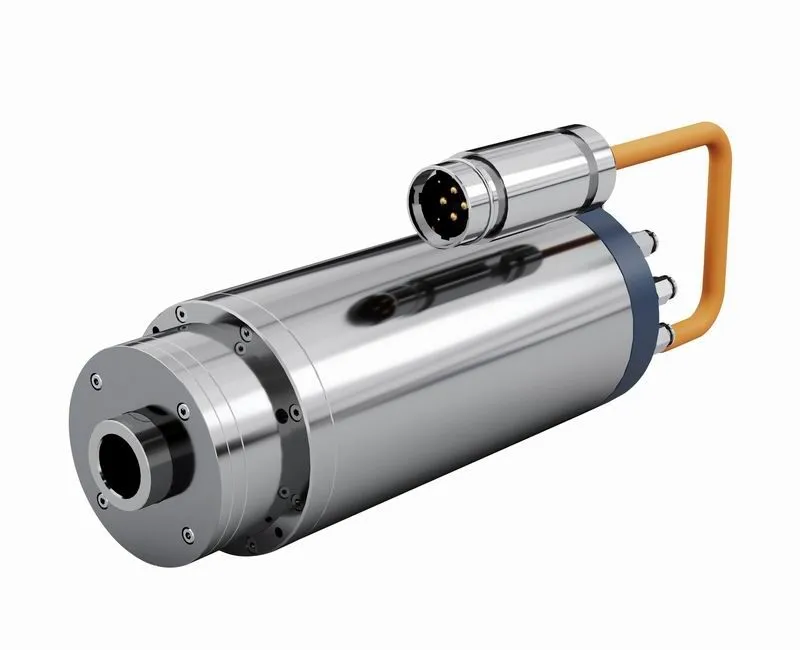
120MD45Y15
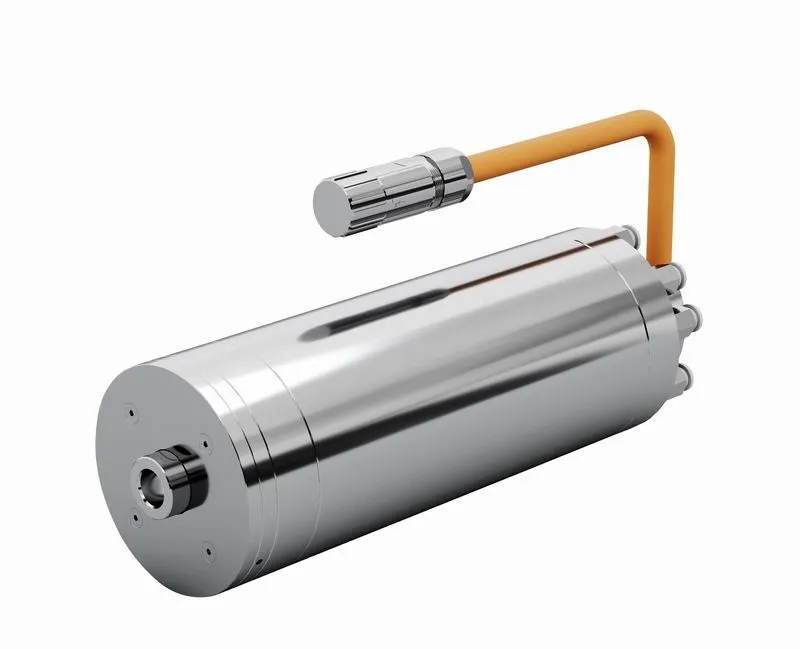
100MD60Y7.5
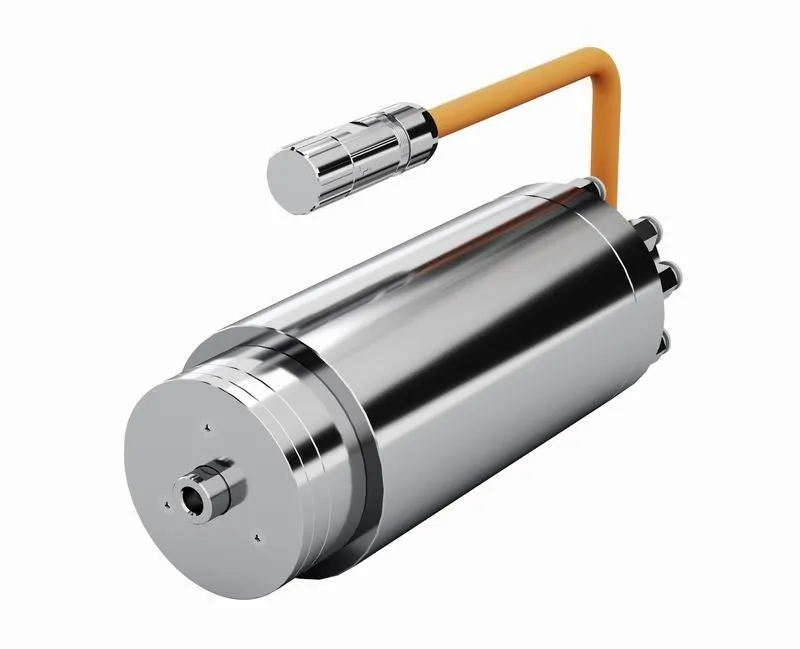
100MD90Y2.5
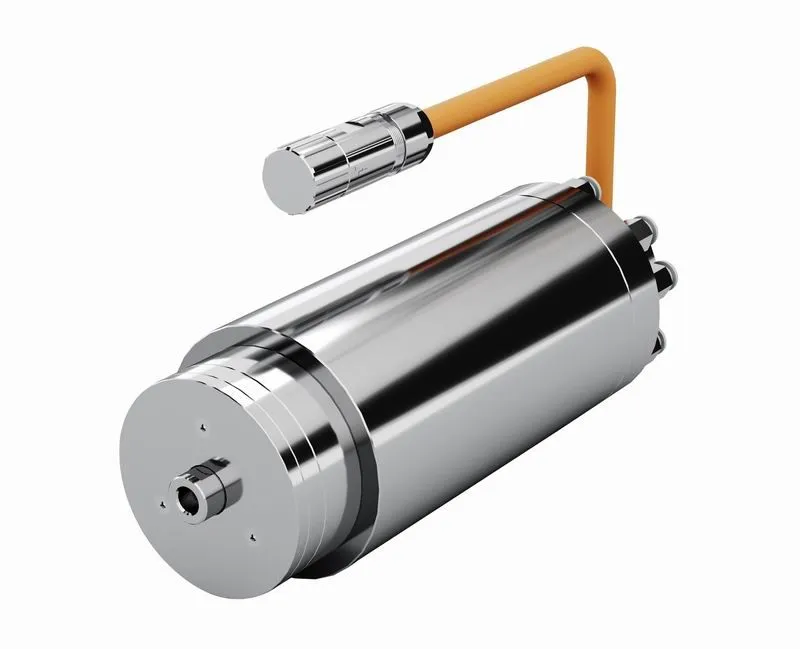
80MD120Y1.5
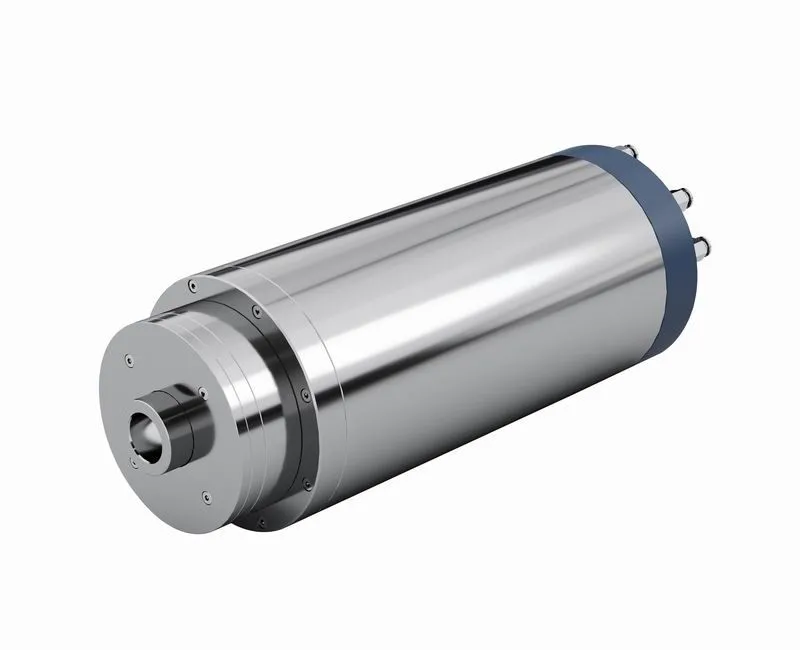
150MD35Y32
Grinding Spindle Types & Technologies
Understanding the differences between external and internal grinding spindle configurations
External Grinding Spindles
Designed for cylindrical grinding of shafts, rolls, and rotating components. Larger housing (155–250mm), higher power (14–52.5kW), and large wheel capacity (up to 600mm). High stiffness for heavy stock removal with superior roundness and straightness. Synchronous motor types provide constant speed for consistent surface finish across long workpieces. 7 standard models.
Internal Grinding Spindles
Compact, high-speed spindles for bore grinding, bearing race grinding, and micro-hole finishing. Slim profile (80–120mm housing) for access to small-diameter bores. Speeds from 45,000 to 120,000 RPM using high-frequency asynchronous motors. Oil-air micro-lubrication is standard for reliable ultra-high-speed bearing operation. 4 standard models.
G0.4 Precision Balancing
G0.4 is the highest balance grade per ISO 1940-1, allowing maximum residual unbalance of 0.4 mm/s. In grinding, residual unbalance directly transfers to the workpiece surface as waviness and chatter. Every Luoyang Songju grinding spindle is individually balanced and certified to G0.4, producing vibration amplitudes typically below 0.5 µm at operating speed.
Oil-Air Micro-Lubrication
Standard on all internal grinding spindles and optional on external types. Precisely metered oil droplets are delivered to each bearing via compressed air, maintaining optimal oil film thickness at all speeds. Compared to grease: extends bearing life 30–50% at high speeds, reduces operating temperature, and enables the 45,000–120,000 RPM speeds required for small-diameter internal grinding wheels.
Wheel Arbor Interfaces
External spindles use custom grinding wheel arbors, HSK flanges (HC63/HC80/HC100), or tapered mounts designed for specific wheel dimensions. Internal spindles use threaded arbor mounts sized for small-diameter wheels. All interfaces are ground in-situ after assembly to guarantee concentricity. Custom arbor specifications available for non-standard grinding wheels.
Thermal Stability
Thermal growth during extended grinding cycles is a primary cause of dimensional drift. Our spiral water-jacket cooling design maintains stable spindle temperature within ±2°C. Built-in PT100 sensors provide real-time temperature data. For ultra-precision applications, we recommend external chiller systems with ±0.5°C control accuracy to virtually eliminate thermal effects on workpiece geometry.
Why Choose Our Grinding Spindles
Engineered for the most demanding surface finish requirements in modern manufacturing
Sub-Micron Surface Finish
G0.4 balanced rotors with P4/P2 precision bearings achieve surface roughness Ra 0.05–0.2 µm on hardened steels. Vibration amplitudes below 0.5 µm at operating speed ensure mirror-quality surface finishes. Every spindle undergoes individual runout verification with laser interferometry before shipment.
Up to 120,000 RPM
Internal grinding spindles operate at speeds from 45,000 to 120,000 RPM, delivering the surface speed needed for small-diameter wheels to achieve efficient material removal. High-frequency asynchronous motors with oil-air lubrication enable reliable continuous operation at extreme rotational speeds.
High Stiffness for Heavy Grinding
Tandem-O bearing arrangements in external spindles provide exceptional radial and axial rigidity. The 250MD06G32 delivers 51 Nm of continuous torque for aggressive stock removal with 600mm wheels. Robust housing designs (alloy steel 42CrMo4) dampen vibration and maintain geometric accuracy under heavy grinding loads.
Extended Service Intervals
Grease-lubricated external spindles: 2,000–3,000 hour relubrication intervals. Oil-air internal spindles: continuous metered lubrication with 6-month oil filter changes. Ceramic hybrid bearing option extends service life 30–50%. Properly maintained spindles routinely achieve 10,000+ operating hours before bearing service.
100% Pre-Shipment Verification
Every grinding spindle undergoes comprehensive testing: runout measurement (laser interferometry), vibration spectrum analysis (FFT), temperature rise test under load simulation, wheel arbor concentricity check, coolant passage integrity verification, and full-speed run-in test. Certified test report and inspection video provided.
Custom Engineering Support
Custom wheel arbors, specialized bearing configurations, unique mounting flanges, and application-specific cooling designs. Our engineering team reviews your grinding machine specifications and workpiece requirements to deliver a spindle optimized for your exact process. CAD data (STEP/DWG) provided for integration verification.
How to Select a Precision Grinding Spindle
Six key parameters to specify for optimal grinding performance
External or Internal Grinding?
External grinding spindles: For cylindrical, surface, and universal grinding. Larger housing diameters (155–250mm), higher power (14–52kW), and large wheel capacity (up to 400mm). 3 models available. Internal grinding spindles: For bore grinding, bearing race grinding, and small hole precision work. Compact (80–120mm housing), high-speed (45,000–120,000 RPM), lower power (1.5–15kW). 5 models available. Select based on your workpiece geometry and required surface finish.
Grinding Wheel Speed (RPM & Surface Speed)
Grinding wheel surface speed (m/s) = π × wheel diameter (m) × RPM ÷ 60. Standard vitrified wheels: 33–45 m/s. CBN wheels: 60–120 m/s. Diamond wheels: 25–50 m/s. For a 400mm wheel at 33 m/s, you need ~1,575 RPM. For a 60mm internal wheel at 60 m/s, you need ~19,000 RPM. Match spindle RPM to your wheel specifications and desired surface speed for optimal grinding performance.
Power (kW) — Material Removal Rate
Light finishing / small parts: 1.5–7.5kW (80MD120Y1.5, 100MD60Y7.5). Medium production grinding: 14–20kW (170MD05G14B, 155MD06G19, 170MD30Y20). Heavy stock removal / large parts: 32–52kW (150MD35Y32, 250MD06G32, 170XDJ12G40, 190XDJ08G52.5). Higher power enables higher downfeed rates and shorter cycle times. Match to your production volume targets.
Bearing Precision — P4 or P2?
All Luoyang Songju grinding spindles use minimum P4 (ABEC-7) grade angular contact ball bearings. For ultra-precision applications requiring surface roughness Ra < 0.1μm and roundness < 0.5μm, we offer P2 (ABEC-9) ceramic hybrid bearing upgrades. Ceramic bearings (Si3N4 balls with steel races) reduce centrifugal load at high speed, generate less heat, and extend lubrication intervals. Contact our engineers to discuss your surface finish requirements.
Lubrication — Grease or Oil-Air?
Grease lubrication: Standard on most external grinding spindles. Maintenance-free for normal duty cycles. Adequate for speeds up to ~15,000 RPM with standard bearings. Oil-air micro-lubrication: Required for speeds above 15,000 RPM and high-duty-cycle production. Delivers precisely metered oil to each bearing, maintaining optimal film thickness. Standard on all internal grinding spindles (45,000–120,000 RPM operation demands oil-air). Extends bearing life by 30–50% compared to grease in high-speed applications.
Balancing & Runout Requirements
All Luoyang Songju grinding spindles are dynamically balanced to G0.4 per ISO 1940-1 (the most stringent balance grade). Runout is guaranteed ≤ 0.001mm at the grinding wheel mounting interface, measured by laser interferometry and documented in the inspection certificate. For applications with extended grinding wheel arbors or special wheel adapters, we recommend on-machine balancing systems. Our engineering team can advise on compatible dynamic balancing equipment for your specific setup.
Industries & Use Cases
Precision grinding spindles are critical to achieving the surface finish and dimensional accuracy demanded by modern manufacturing
Bearing Manufacturing
Internal and external raceway grinding for ball bearings, roller bearings, and crossed roller bearings. Our internal grinding spindles at 60,000–120,000 RPM produce the sub-micron raceway geometry required for P4/P2 precision bearing performance.
Automotive Components
Crankshaft journals, camshaft lobes, transmission shafts, CV joint races. External cylindrical grinding spindles with large wheel capacity handle high-volume automotive production with consistent roundness and surface finish across long production runs.
Aerospace
Turbine shaft journals, landing gear pins, hydraulic actuator bores. Ultra-precision internal and external grinding of hardened aerospace alloys (Inconel, titanium) requires the rigidity and thermal stability our spindles provide.
Machine Tool Building
Spindle cartridge grinding for CNC lathes and machining centers. Guideway and ballscrew grinding for machine tool assembly. Our spindles are used by machine tool builders worldwide for both production and in-house component manufacturing.
Medical Devices
Orthopedic implant bearing surfaces (hip, knee), surgical instrument finishing, dental implant components. Mirror-quality surface finishes on cobalt-chrome and titanium alloys demand the ultra-low vibration and precision our spindles deliver.
Hydraulics & Fluid Power
Hydraulic cylinder bores, pump housings, valve spools and bodies. Internal grinding of precision bores with stringent roundness and surface finish requirements for sealing performance. Our internal spindles excel in these demanding bore-finishing applications.
Custom Grinding Spindle Manufacturing
Grinding applications often require spindle configurations that go beyond standard catalog specifications. We offer comprehensive custom engineering services to match your specific grinding machine, workpiece geometry, and surface finish requirements.
Custom Wheel Arbors
Threaded, tapered, HSK, or flange interfaces machined to your wheel specifications
Bearing & Lubrication Options
P2 ceramic hybrid, custom preload, oil-air, oil-mist, or permanent grease
Machine-Specific Mounting
Custom housing diameters, flange patterns, and bolt circles for retrofit or new-build integration
Application-Specific Balancing
Balancing with wheel mounted, multi-plane balancing for extended arbors
Standard Customization Options
Grinding Spindle FAQ
What surface finish can I achieve with Luoyang Songju grinding spindles?
With proper wheel selection and process parameters, our G0.4 balanced grinding spindles with P4/P2 bearings can achieve surface roughness Ra 0.05–0.2μm (mirror finish) on hardened steels. The key factors: spindle balance quality (G0.4), bearing precision (P4 minimum, P2 for ultra-finishing), wheel dressing technique, and coolant delivery. Our 120MD45Y15 and 80MD120Y1.5 internal grinding spindles, operating at 45,000–120,000 RPM with oil-air lubrication, are specifically engineered for sub-0.1μm Ra bore finishing.
Why is G0.4 balance important for grinding spindles?
G0.4 is the highest balance grade per ISO 1940-1, allowing a maximum residual unbalance of 0.4 mm/s (mm/s of the center of gravity at service speed). In a grinding spindle, residual unbalance directly transfers to the workpiece surface as waviness and chatter marks. A G0.4 balanced spindle at 6,000 RPM produces vibration amplitudes typically below 0.5μm — essentially imperceptible in the finished surface. Lower balance grades (G1.0, G2.5) can leave visible chatter patterns on ground surfaces. Every Luoyang Songju grinding spindle is individually balanced and certified.
Can grinding spindles be used for milling operations?
Our 170XDJ12G40 HC80 and 190XDJ08G52.5 HC100 are hybrid grinding/milling spindles specifically designed for both operations. Standard grinding spindles are optimized for radial grinding loads and may not have the axial stiffness required for heavy milling. For occasional light milling with small tools, a grinding spindle can function, but for dedicated milling, we recommend our CNC electrospindle series which feature drawbar clamping systems, tool taper interfaces (BT/HSK), and bearing arrangements optimized for combined axial/radial milling loads.
How often should grinding spindle bearings be regreased?
Grease-lubricated grinding spindles: regrease every 2,000–3,000 operating hours under normal conditions. High-duty-cycle production may require regreasing every 1,000–1,500 hours. Oil-air lubricated spindles: the metering system runs continuously — check oil reservoir level weekly and replace oil filter elements every 6 months. We provide spindle-specific lubrication schedules with each shipment. Proper lubrication is the single most important factor in spindle bearing life — under-lubrication causes wear; over-lubrication causes heat buildup and grease churning losses.
What information do you need to quote a grinding spindle?
For accurate quotation, please provide: (1) Grinding type (external/internal/surface/universal), (2) Workpiece material and hardness, (3) Required surface finish (Ra in μm), (4) Grinding wheel dimensions (OD × width × bore), (5) Required wheel speed (RPM or m/s), (6) Machine make/model for integration verification, (7) Production volume (parts/hour or annual quantity). Our engineers will recommend the optimal spindle model and configuration. Typical quotation turnaround: 24–48 hours.
Need a Precision Grinding Spindle?
Tell us your grinding application, workpiece material, and surface finish requirements. Our engineering team will recommend the optimal spindle configuration with pricing and lead time. 24-hour response guaranteed.
Get a Competitive Quotation
Fill out the form below and our engineering team will respond within 24 hours.
Explore More Products
Browse our full range of precision components