Custom
Bearings for pumps and compressors
Angular-contact and high-capacity cylindrical bearings for machines that run in compressor oil, refrigerator oil, and ammonia. Other fluids are a separate confirmation.
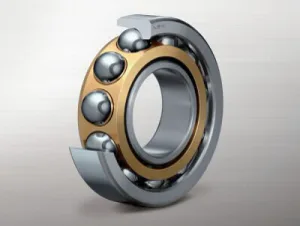
Bearing types and fluids
Pump and compressor bearings need chemical stability and resistance to oil and heat. The fluids this range is built around are compressor oil, refrigerator oil, and ammonia. Other refrigerants, solvents, and process chemicals are not covered by that list and are confirmed for the machine.
The usual structures are angular-contact ball bearings and high-capacity cylindrical roller bearings with roller-guided cages. The internal design is aimed at load capacity, axial capacity, and lubrication in the process oil. No catalog load or speed figure is given for the range.
Screw-compressor bearings and corrosion-resistant bearings are made to the duty. Steels such as 9Cr18 and 9Cr18Mo are not a menu: the grade is chosen for the fluid.
| Published item | How to read it |
|---|---|
| Fluids named | Compressor oil, refrigerator oil, ammonia refrigerant |
| Angular-contact ball bearing | Named as a primary pump and compressor structure |
| High-capacity cylindrical roller | Named, with a roller-guided cage |
| Claimed result | Higher load capacity, higher ultimate axial capacity, improved lubrication behaviour. No numeric rating is printed. |
| Screw compressor and corrosion-resistant builds | Offered as custom work, confirmed per inquiry |
| Other chemicals | Not listed. Do not treat the ammonia sentence as a universal chemical approval. |
Product photographs
Oil, refrigerant, and the axial load
A pump or a compressor bearing often lives in the fluid it is helping to move, or in the oil that is mixed with that fluid. The cage, the residual preservative, and any seal elastomer can swell, harden, or lose strength in a refrigerant that the steel rings shrug off. Ammonia is the refrigerant Zhongyue names. Hydrocarbons, CO2, HFCs, and HFOs are different chemistries. A bearing that is plausible in ammonia is not thereby approved for the others. Send the fluid, the oil it is diluted with, and the temperature.
Screw compressors are the custom case Zhongyue calls out. The rotors need radial support, usually a cylindrical roller, and the axial load from the pressure difference has to land on an angular-contact bearing or another thrust arrangement. The axial load grows with discharge pressure. “Higher ultimate axial capacity” on the manufacturer’s page is a direction of the design, not a newton figure you can drop into a calculation.
Roller-guided cages, which Zhongyue mentions, locate the cage from the rollers rather than from a land on the ring. That can suit a bearing whose lubrication is the process oil, because the cage is not relying on a land that may be starved. It is also a manufacturing choice. Ask for it if the oil is thin or if the bearing starts under load. Do not assume every cylindrical bearing in the category is built that way until Zhongyue confirms the drawing.
Heat comes from the gas as well as from the bearing. A refrigerator compressor and a process-gas compressor do not share a temperature. The oil that lubricates the bearing may be diluted by refrigerant, and diluted oil has a lower viscosity than the drum says. That is why a catalog viscosity at 40°C is not the viscosity in the bearing.
Fluid and bearing choice
Write down the machine: centrifugal pump, screw compressor, reciprocating compressor, or another type. State the fluid, the oil, the suction and discharge pressures if you know them, the speed, and whether the bearing is oil-bathed, grease-packed, or seeing the process fluid directly.
If the need is corrosion resistance in a fluid that is not oil or ammonia, say so plainly. Zhongyue offers corrosion-resistant bearings as custom work. The grade is confirmed, not chosen from a slogan.
Standard spindle angular-contact pages are for machine tools. They are a useful reference for contact angle and cage ideas. They are not a chemical approval for a compressor.
Installation and the fluid that is already in the machine
Do not install a bearing still coated in a preservative that the process fluid will strip and carry into a valve or a screw. If the machine specification calls for a washed, dry bearing, that wash is part of supply, not an afterthought on site.
Axial location has to match the pressure direction. An angular-contact bearing takes thrust in one direction. A reversed ring in a compressor looks assembled and unloads the wrong face at the first start.
Keep the oil clean during a bearing change. The new bearing does not survive the debris the old one made. Flush the housing to the cleanliness standard the compressor maker already specifies.
After a refrigerant leak into the oil, do not restart on the assumption that the bearing’s “chemical stability” covers a changed mixture. Ask. The published sentence is about the fluids Zhongyue named, not about a contaminated sump.
What to send with the inquiry
Write to jin@luoyangsongju.com with the duty and the bearing you need matched.
jin@luoyangsongju.com- ▸Machine type: pump, screw compressor, or other
- ▸Fluid and oil, including refrigerant grade if there is one
- ▸Speed, and suction and discharge pressure if known
- ▸Radial and axial load, or enough of the rotor and pressure data to estimate them
- ▸How the bearing is lubricated: bath, circulation, grease, or the process fluid
- ▸Any corrosion requirement, and whether a washed bearing is mandatory
Questions before you enquire
Does Zhongyue approve every refrigerant?
No. The page names compressor oil, refrigerator oil, and ammonia. Any other fluid is confirmed for that machine. It is not covered by the ammonia sentence.
Which bearing types are named?
Angular-contact ball bearings and high-capacity cylindrical roller bearings, the latter with roller-guided cages. Screw-compressor and corrosion-resistant builds are custom.
Are load ratings published?
No numeric load or speed is printed for this category. The words “higher capacity” are not a catalog C or C0.
Is the brass-colored cage in the image a material specification?
It is the cage colour on the image Zhongyue published for the category. The cage material for a given fluid is confirmed with the inquiry.
Manufacturer quality certificate
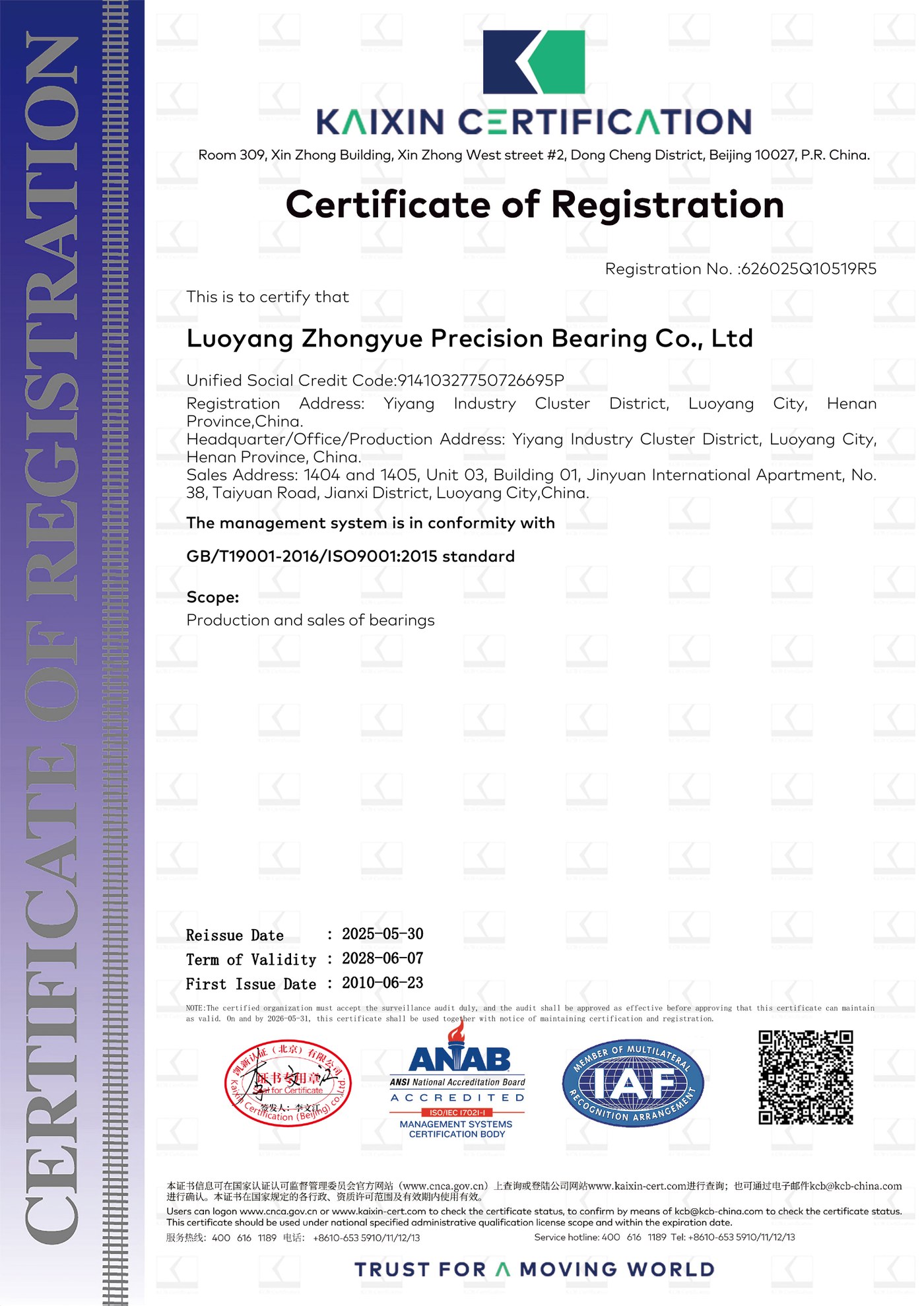
Zhongyue’s quality management system is certified to GB/T 19001-2016 / ISO 9001:2015 for the production and sales of bearings. The certificate is held by Luoyang Zhongyue Precision Bearing Co., Ltd. Confirm current validity with the certification body.
- Holder
- Luoyang Zhongyue Precision Bearing Co., Ltd.
- Standard
- GB/T 19001-2016 / ISO 9001:2015
- Registration no.
- 626025Q10519R5
- Issuer
- Kaixin Certification (Beijing) Co., Ltd.
- First issue
- 23 June 2010
- Reissue / valid through
- 30 May 2025 / 7 June 2028
- Scope
- Production and sales of bearings
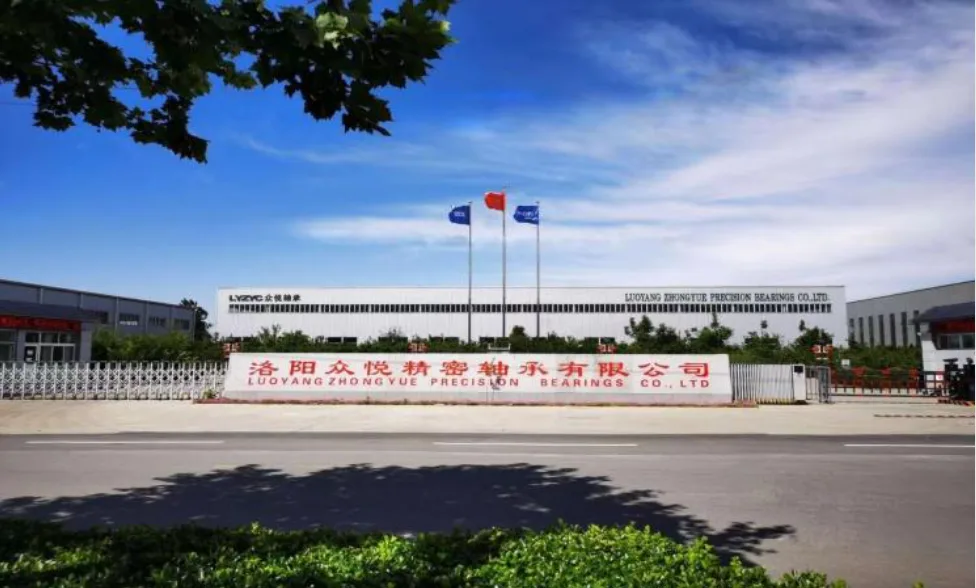
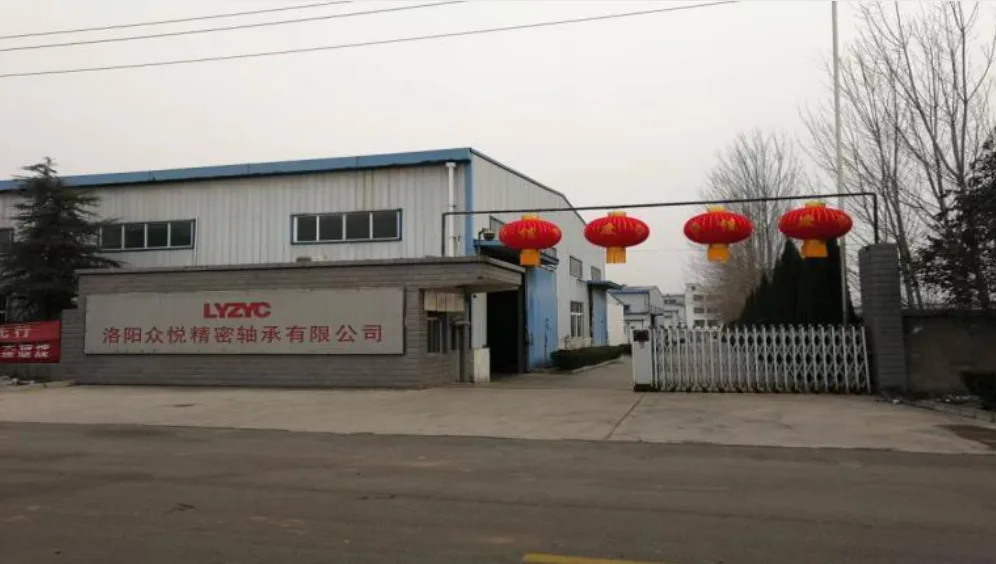
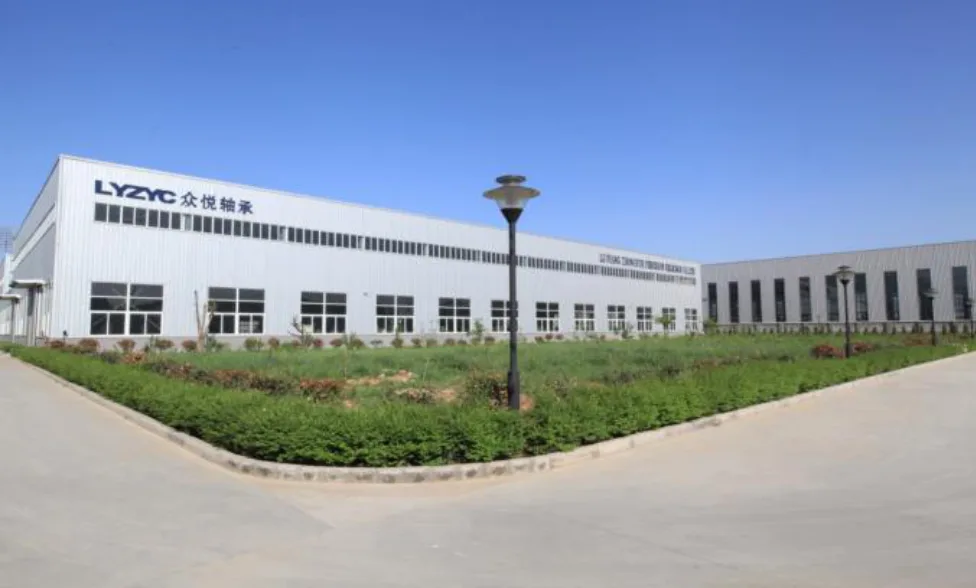
The Zhongyue plant
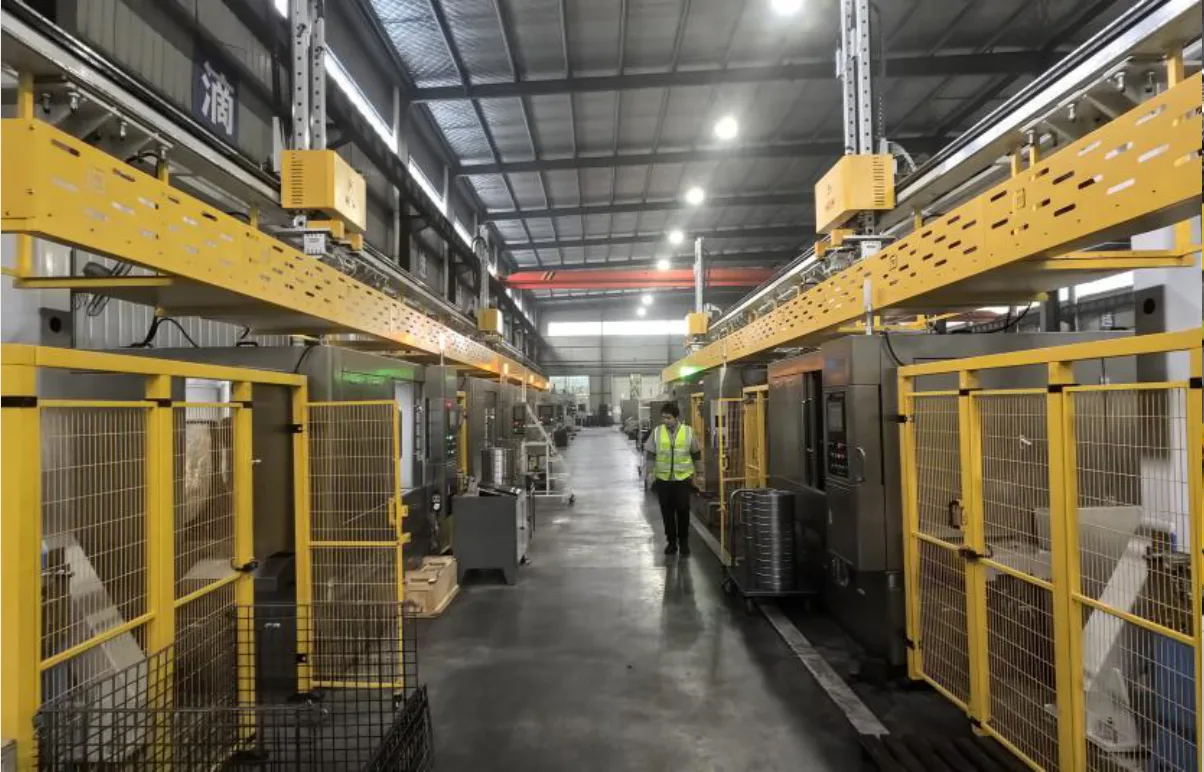
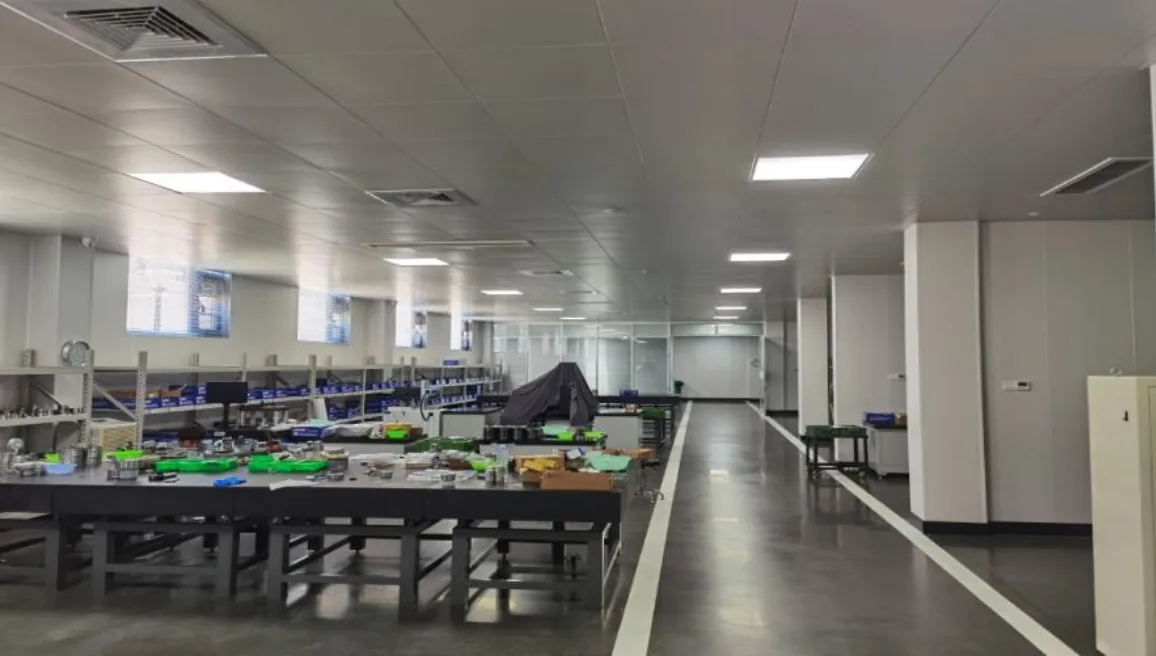
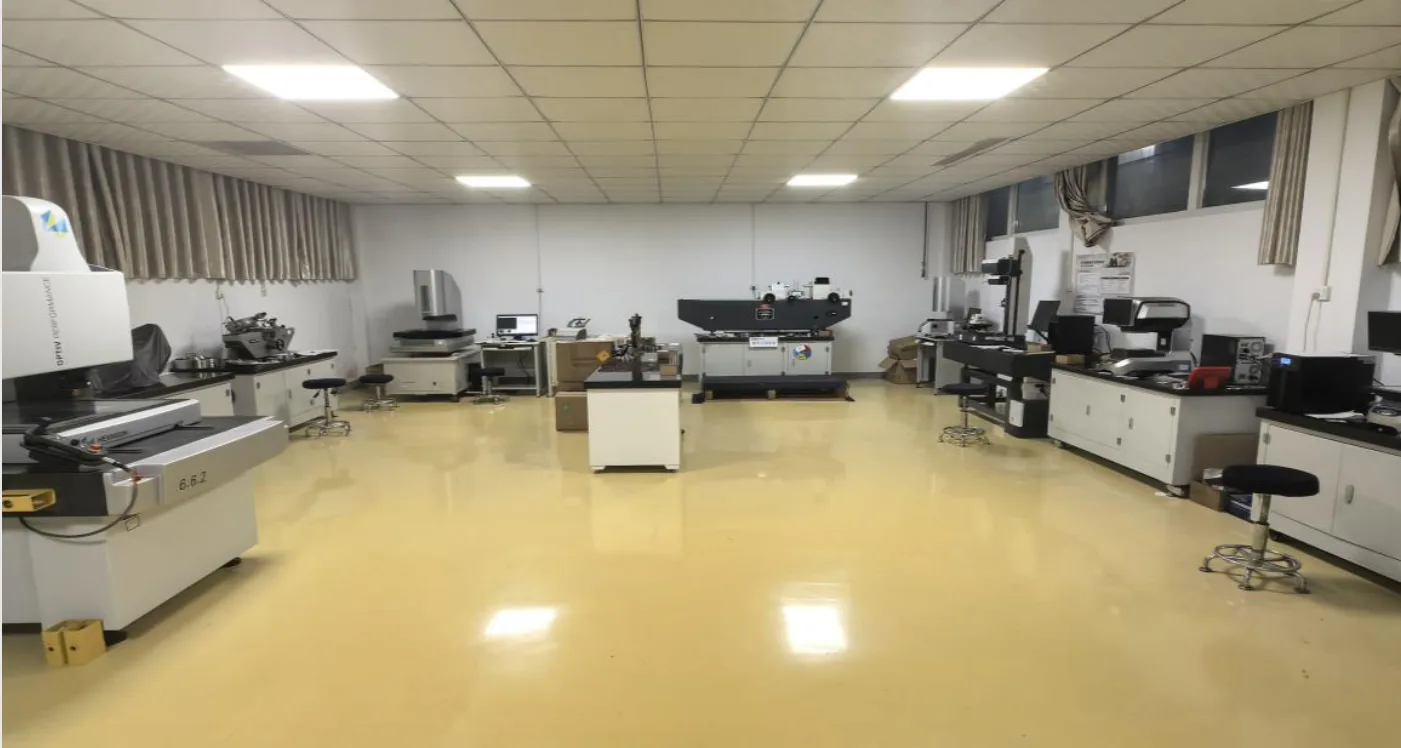
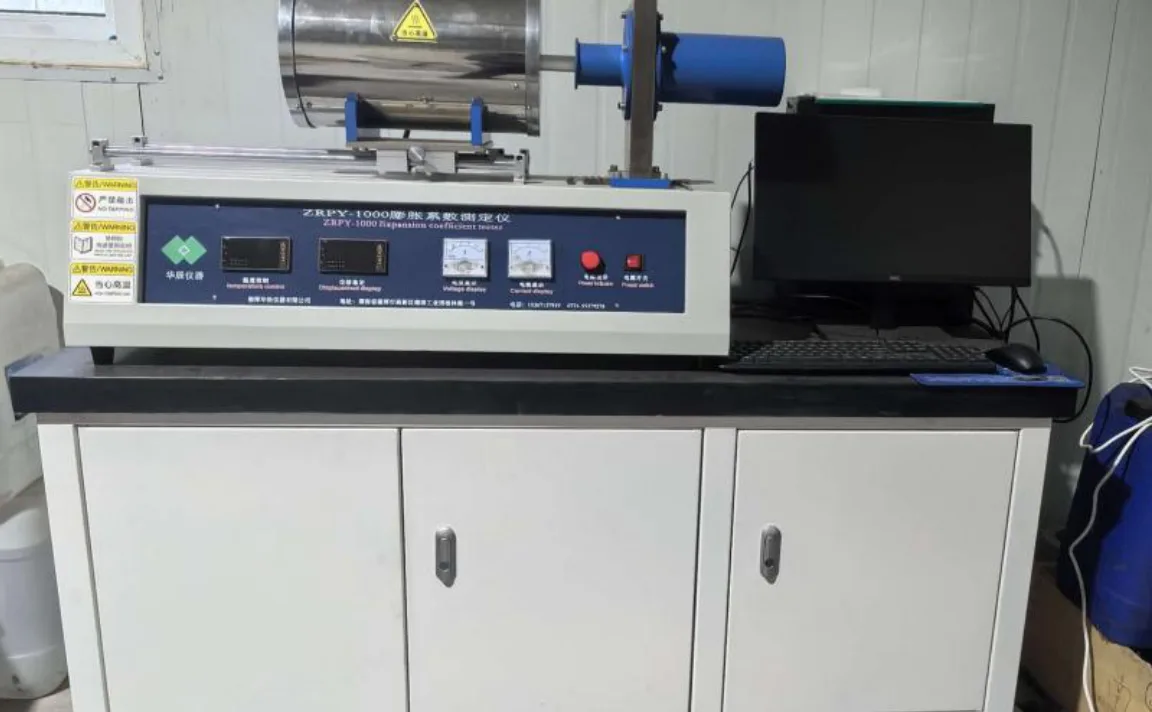
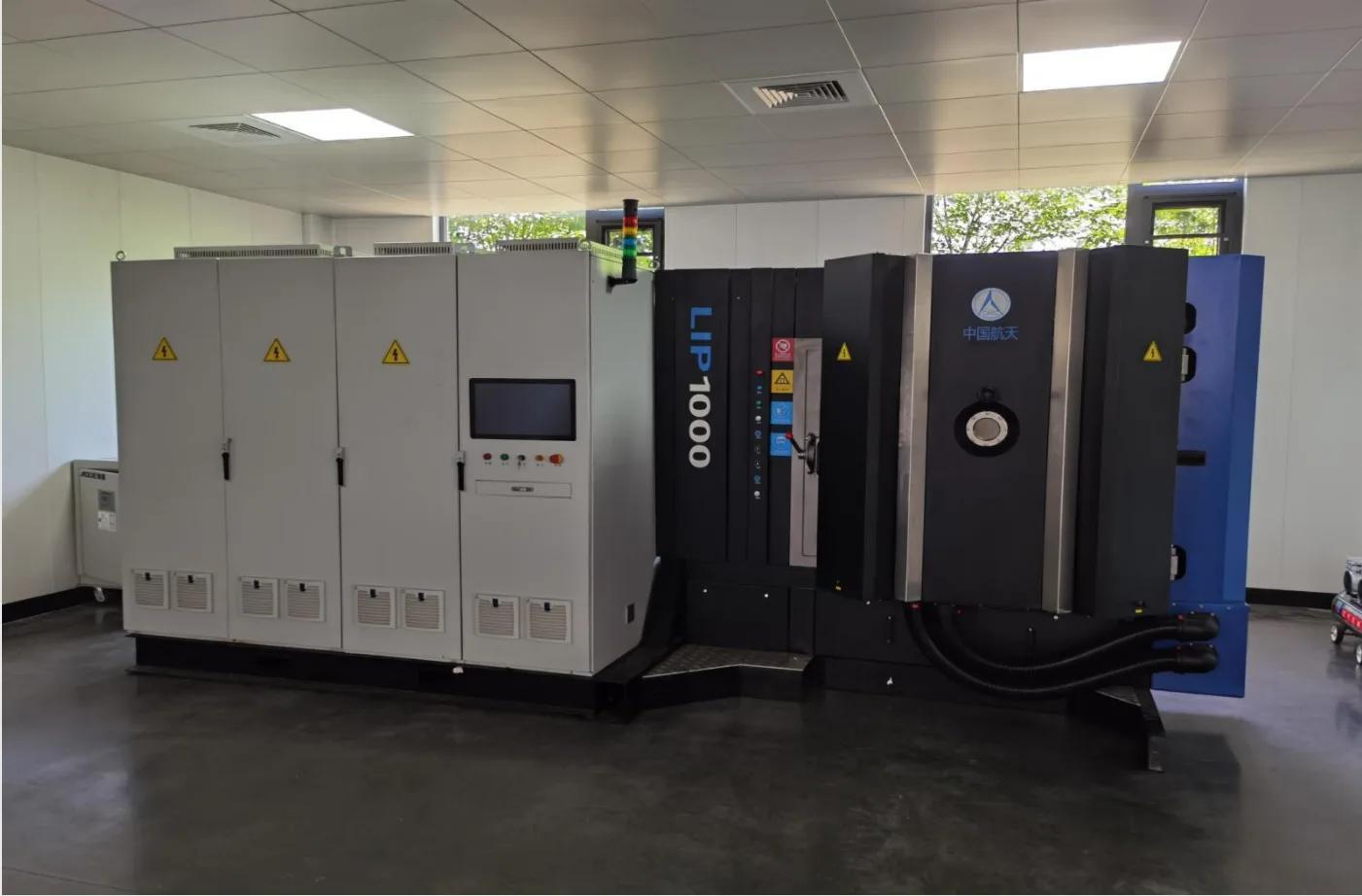
Zhongyue runs two campuses, over 46,000 m² in total, with 30,000+ m² of workshops and offices, 150+ people, 400+ bearing machines, and 500+ inspection instruments.

Machines, metrology, and materials
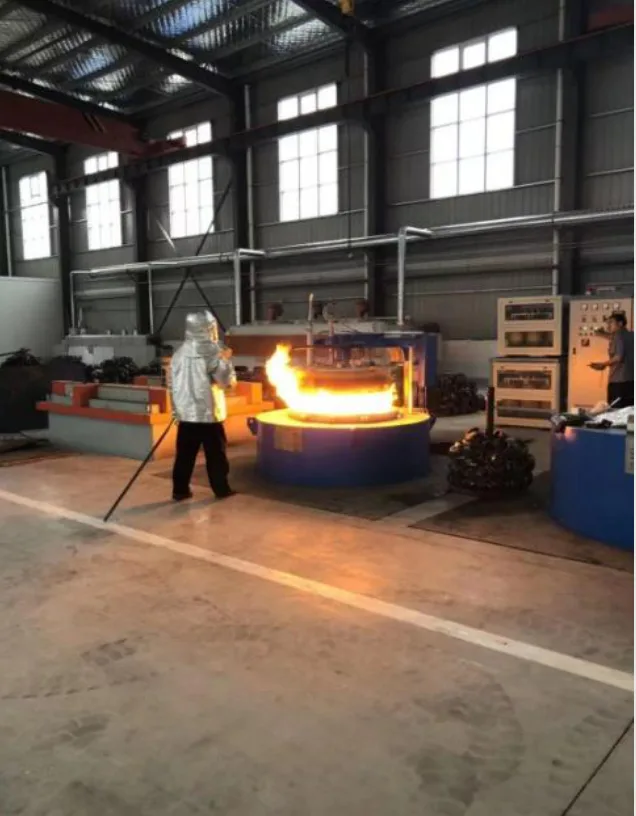
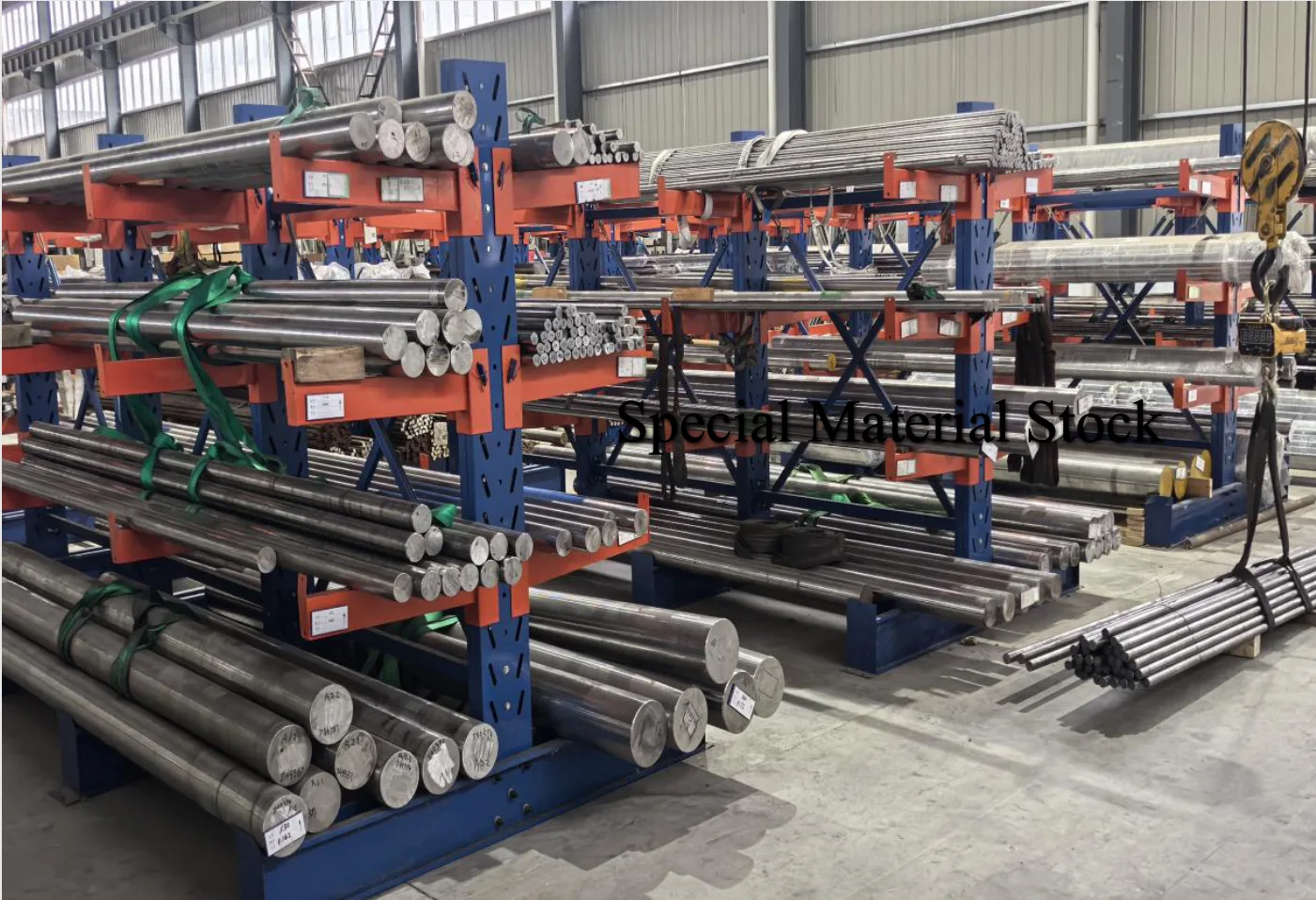
Special-material stock includes bearing steel ZGCr15, stainless 9Cr18 and 9Cr18Mo, high-nitrogen stainless X30 and X40N, and high-temperature steel M50. Heat treatment includes vacuum quenching and a cryogenic treatment step at −196°C. That step is part of manufacture, not a running-temperature rating.