Custom
Small turbojet engine bearings
P2 and P4 bearings for small turbojet and turbofan shafts. The catalog temperature ceiling is 450°C, and it is confirmed for the engine, not assumed.
Construction
Rings are a high-nitrogen stainless steel of the Cronidur 30 type, with a special heat treatment and a cold treatment. Rolling elements are hot-isostatic-pressed ceramic balls or ceramic rollers. Full-complement angular-contact bearings are supplied without a cage. Angular-contact, four-point-contact, and cylindrical roller bearings use a silver-plated cage in high-strength alloy steel.
Grades are P2 and P4. Lubrication is a jet of aviation kerosene. The maximum temperature for the line is 450°C, and it has to be confirmed for the shaft position and the speed. Bores from 8 mm to 400 mm can be undertaken for turbojet and turbofan shafts. That is a build range, not a shelf of finished parts. Cold treatment of the rings is a manufacturing step, not a running temperature.
Representative models are HKSV788, HKSV708, HKSV7000, HKSV7001, HKSV7002, HKSV7004, and HKSV71904. Dimensions are printed only for the first three: 8×16×6, 8×22×7, and 10×26×8. The other names are inquire-only.
| Item | Published by Zhongyue |
|---|---|
| Ring material | High-nitrogen stainless steel of the Cronidur 30 type |
| Ring processing | Special heat treatment and a cold treatment |
| Rolling elements | Hot-isostatic-pressed ceramic balls, or ceramic rollers |
| Without a cage | Full-complement angular-contact ball bearings |
| With a cage | Angular-contact, four-point-contact, and cylindrical roller bearings. Cage: silver-plated high-strength alloy steel |
| Precision | P2 and P4 |
| Lubrication | Jet of aviation kerosene |
| Temperature | Catalog maximum 450°C. Confirm it for the duty. |
| Bore range stated | 8 mm to 400 mm for turbojet and turbofan high-speed, high-temperature bearings |
| Model | Published size, mm |
|---|---|
| HKSV788 | 8 × 16 × 6 |
| HKSV708 | 8 × 22 × 7 |
| HKSV7000 | 10 × 26 × 8 |
| HKSV7001 | inquire |
| HKSV7002 | inquire |
| HKSV7004 | inquire |
| HKSV71904 | inquire |
Product photographs
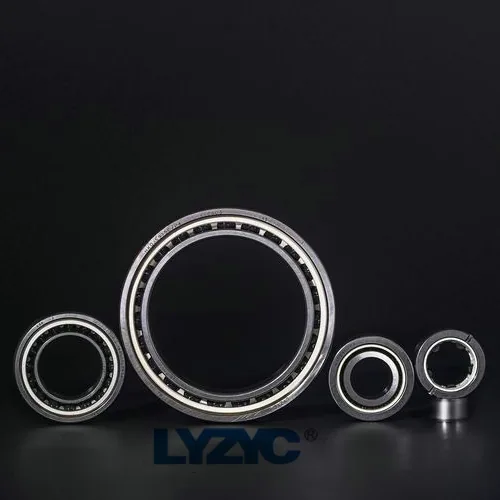
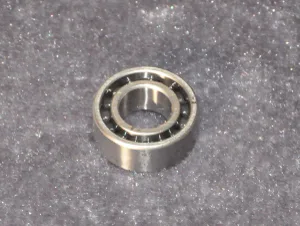
Shaft, load, and lubrication
A small turbojet shaft is short, hot, and fast. One bearing usually has to locate the rotor axially. Another, often a roller, has to let the shaft grow as the engine lights and the temperature climbs. Zhongyue’s list covers both ideas: angular-contact and four-point ball bearings for location, and cylindrical rollers where axial float is wanted. Which position gets which type is the engine drawing, not a rule this page can assign.
Aviation kerosene as a jet is a thin lubricant and a coolant at the same time. The film is weaker than a machine-tool oil film, so the surface, the ceramic rolling element, and the cage do more of the work. A silver-plated steel cage is published for the caged types. Silver is used in this kind of service because a thin silver film can still separate metal when the oil film breaks. That is the reason the plating is there. No coating thickness is given.
A full-complement angular-contact bearing leaves the cage out and puts more balls in the same envelope, which raises the load the bearing can share and removes a cage that would otherwise run hot in a thin fuel. The cost is skidding and heat if the bearing is not loaded enough to drive every ball. Do not specify “full complement” only because it sounds stronger. Say whether the position is loaded.
Four-point contact can take thrust in both directions in one bearing, because each ball has two pairs of contact. The kinematics are fussier than a single-angle bearing, and a four-point bearing that is asked to spin fast and carry a heavy radial load at the same time is often the wrong tool. It belongs where the axial load reverses and a second bearing will not fit.
Hot-isostatic-pressed ceramic balls or rollers are lighter than steel, so the centrifugal load on the outer race grows more slowly with speed. They are also the rolling elements Zhongyue names for this line. They do not, by themselves, raise the 450°C catalog ceiling.
Temperature
The 450°C figure is the maximum Zhongyue prints. It is not a promise that every HKSV model, at every speed, in every position, may run there. Send the position (compressor, turbine, or accessory), the temperature you expect at the bearing, and the speed. Songju will ask Zhongyue to confirm the combination.
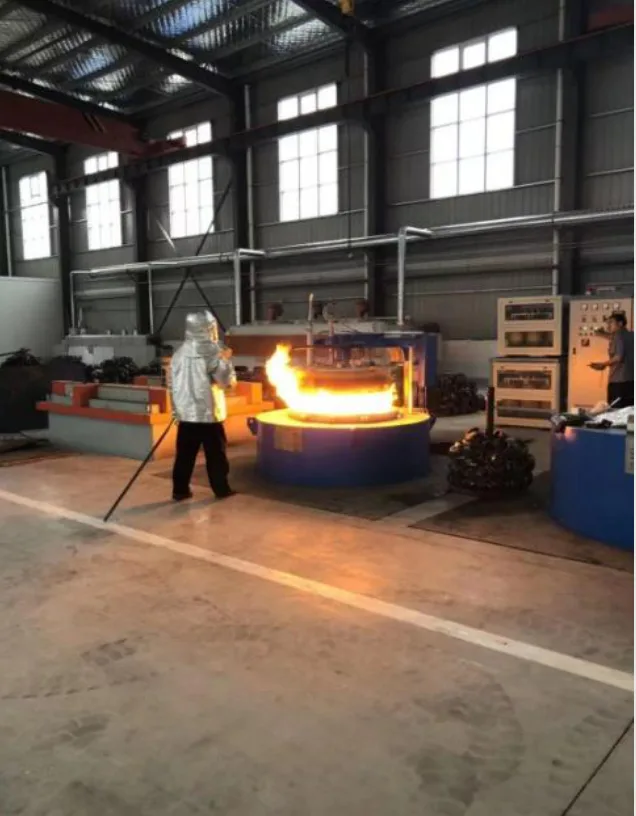
The cold treatment named with the heat treatment is how the rings are processed. It is not a cryogenic running temperature, and it is not evidence that the bearing is cleared for liquid oxygen or any other cold fluid. Cryogenic pumps are a different category.
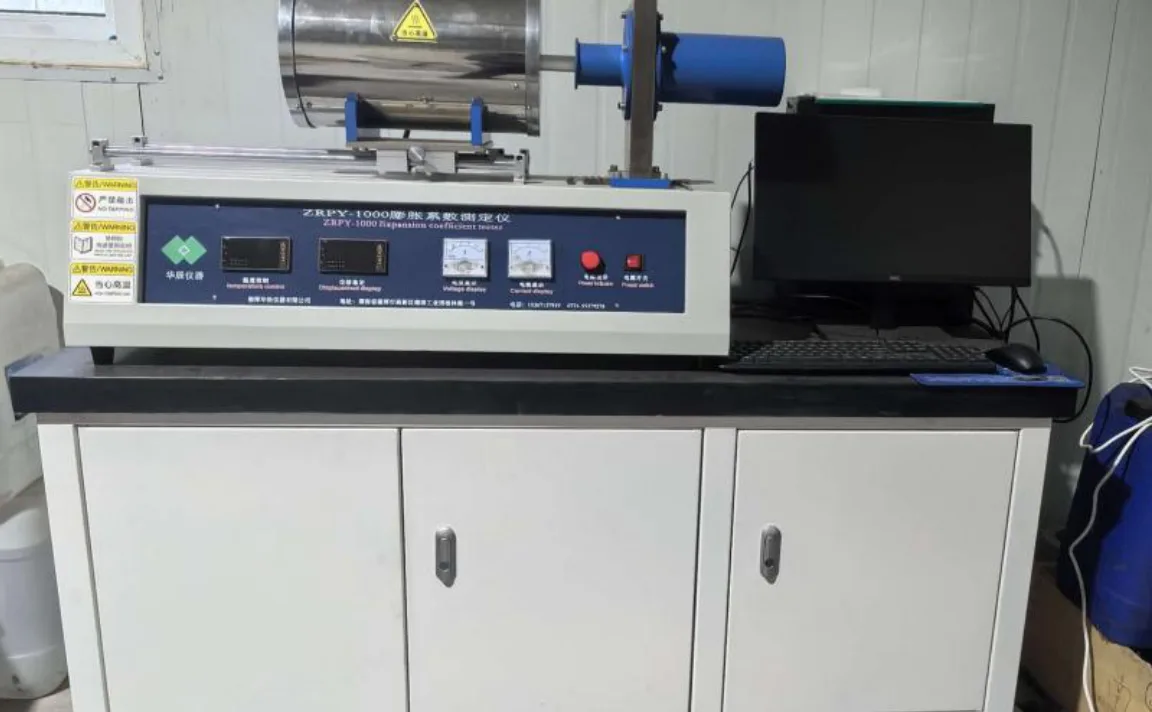
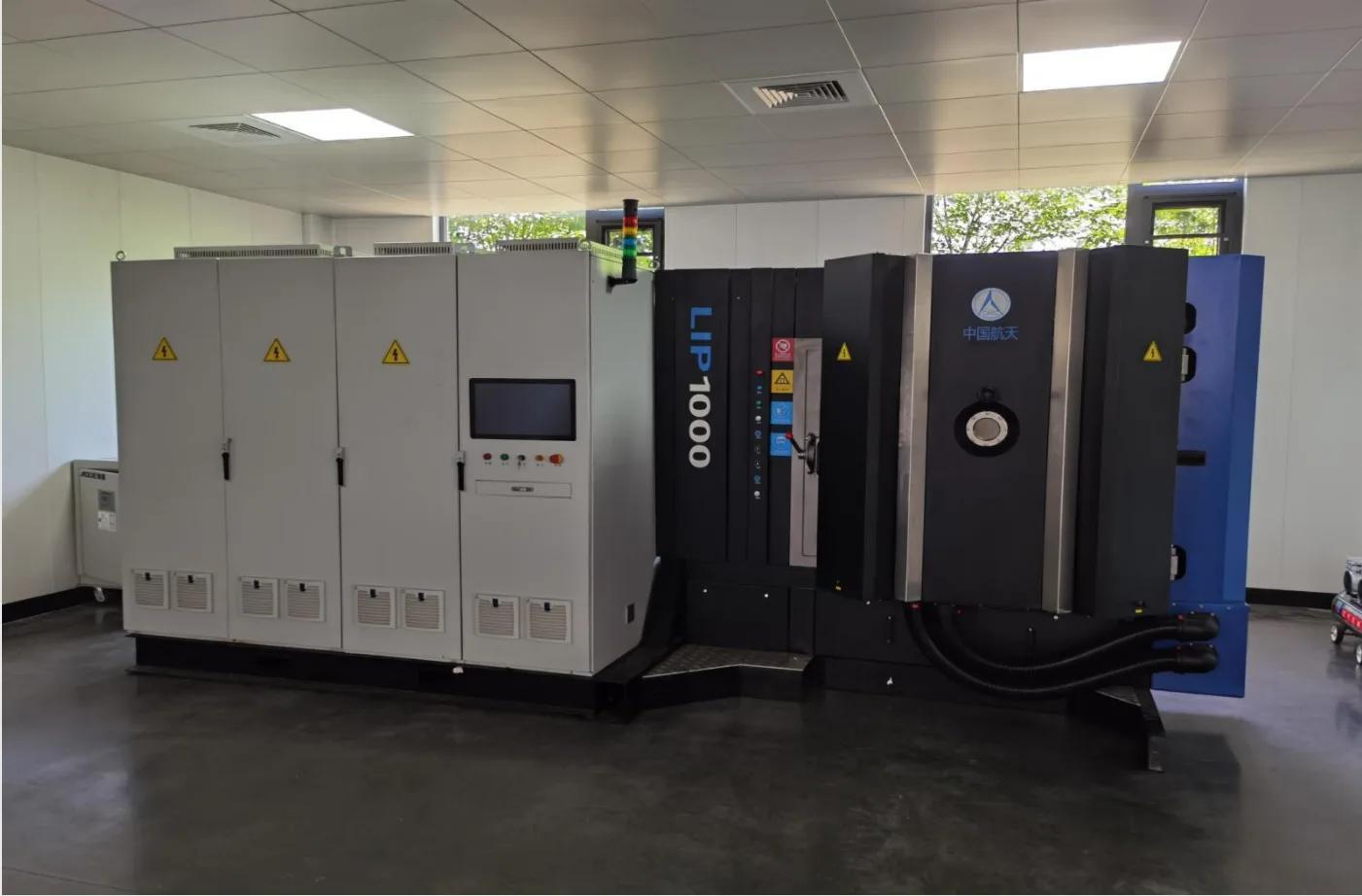
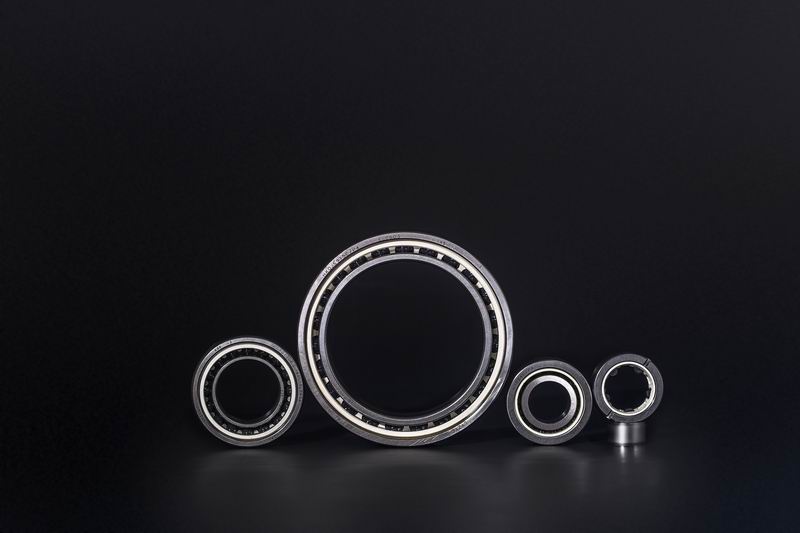
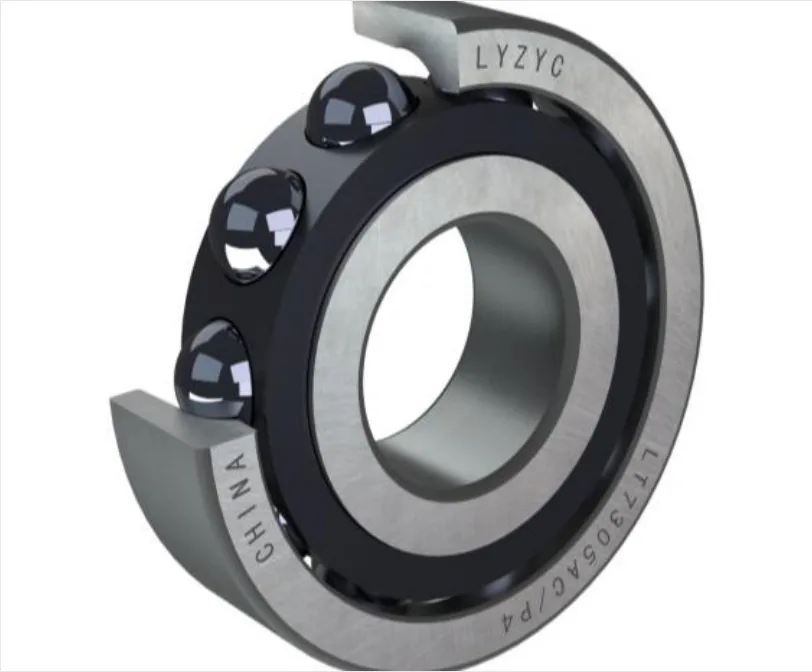
The aviation range beside this line includes other high-temperature ball and roller bearings. The photograph below is from that range. It is not an HKSV model card. The heat-treatment photograph is plant equipment, shown so the process step is not confused with the running temperature.
Handling
These bearings are small, and a press that is casual by machine-tool standards will brinell them. Seat the ring that is moving. Do not tap across the balls. Keep the rotor balanced after the bearing is on: a bearing does not correct a rotor that was out of balance.
Kerosene-jet lubrication has to reach the bearing. A fitting that looks right and feeds the wrong face of a full-complement bearing will not show the mistake until the cage-less complement runs dry. Match the oil-way to the drawing.
Leave identification on the pair. HKSV7001, HKSV7002, HKSV7004, and HKSV71904 do not have printed dimensions on the source page. Do not borrow the 8×16×6 of HKSV788 for a different model because the names look related.
Store them clean and closed. A grain of grit in a 8 mm bore bearing is a large fraction of the internal clearance. There is no published clearance table on the page.
What to send with the inquiry
Write to jin@luoyangsongju.com with the duty and the bearing you need matched.
jin@luoyangsongju.com- ▸Model if you have one (HKSV788, HKSV708, HKSV7000, or another from the list)
- ▸Bore, outside diameter, and width if the model is one of the inquire-only names
- ▸Shaft position, speed, and temperature at the bearing
- ▸Whether you need a full-complement ball bearing, a caged angular-contact or four-point bearing, or a cylindrical roller
- ▸Confirmation that lubrication is a kerosene jet, or a statement of the fuel you actually use
- ▸How many bearings are on the shaft, and which one locates it
Questions before you enquire
What temperature can I use in a calculation?
The only temperature Zhongyue prints for this line is a maximum of 450°C. Use it as a catalog ceiling and have it confirmed for the position and the speed. Do not treat the manufacturing cold treatment as a second temperature rating.
Which models have dimensions?
HKSV788 is 8×16×6 mm, HKSV708 is 8×22×7 mm, and HKSV7000 is 10×26×8 mm. HKSV7001, HKSV7002, HKSV7004, and HKSV71904 are listed without sizes.
Is a bore of 400 mm a stock part?
Zhongyue says it can undertake turbojet and turbofan bearings from 8 mm to 400 mm bore. That is a stated capability. It is not a shelf of finished parts, and each bore is confirmed.
Are P2 and P4 both available?
Both grades are what Zhongyue prints for this line. Which grade a given model is supplied in is part of the confirmation.
Manufacturer quality certificate
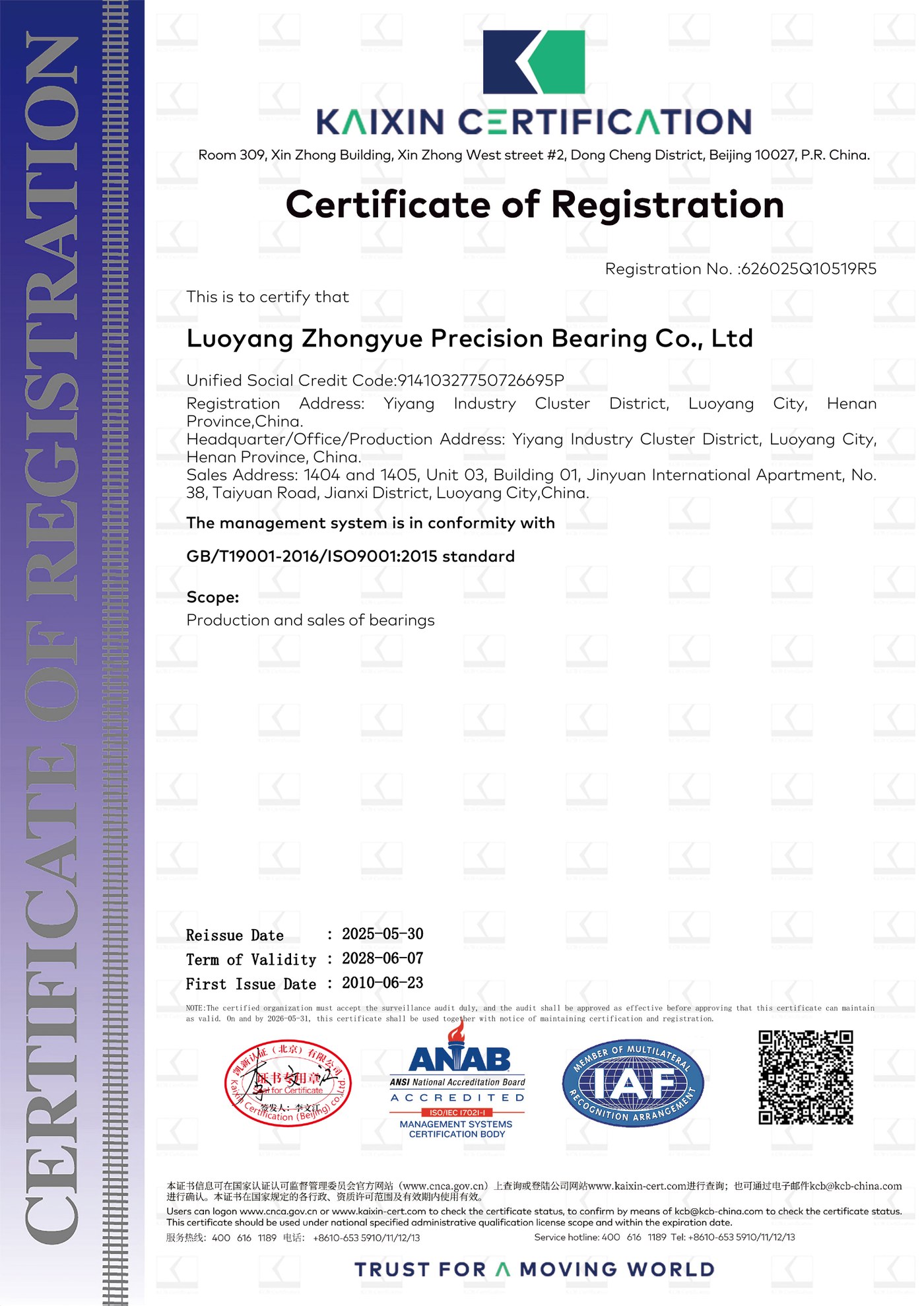
Zhongyue’s quality management system is certified to GB/T 19001-2016 / ISO 9001:2015 for the production and sales of bearings. The certificate is held by Luoyang Zhongyue Precision Bearing Co., Ltd. Confirm current validity with the certification body.
- Holder
- Luoyang Zhongyue Precision Bearing Co., Ltd.
- Standard
- GB/T 19001-2016 / ISO 9001:2015
- Registration no.
- 626025Q10519R5
- Issuer
- Kaixin Certification (Beijing) Co., Ltd.
- First issue
- 23 June 2010
- Reissue / valid through
- 30 May 2025 / 7 June 2028
- Scope
- Production and sales of bearings
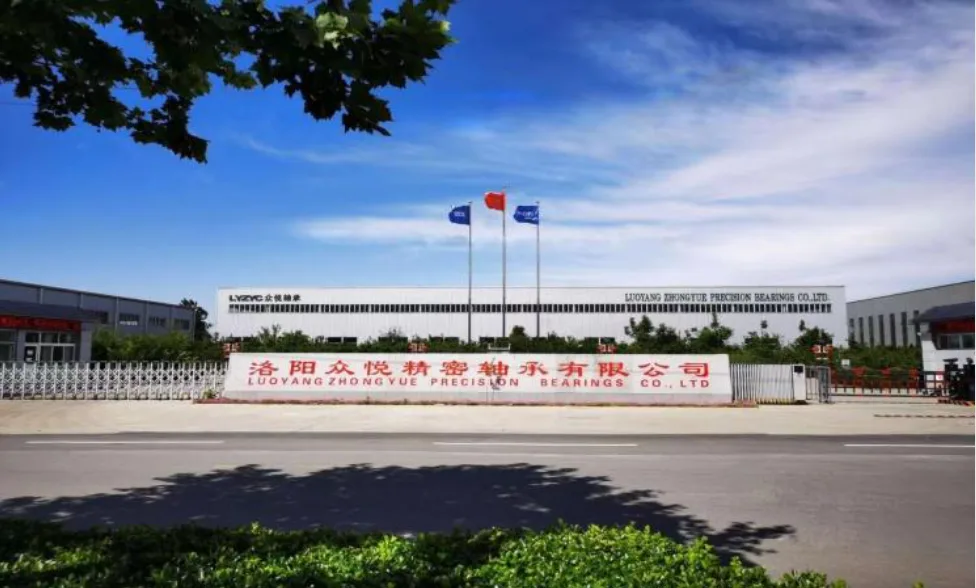
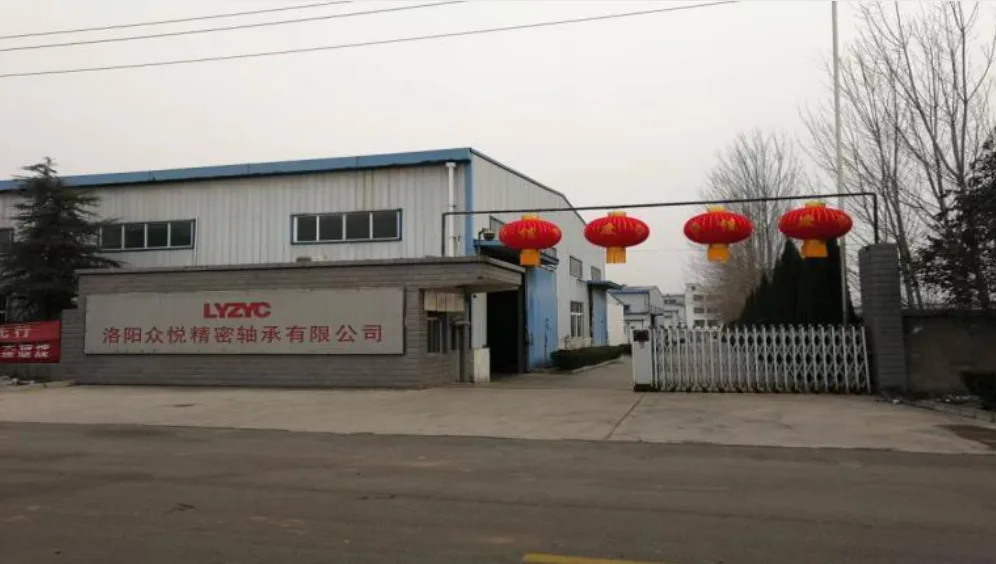
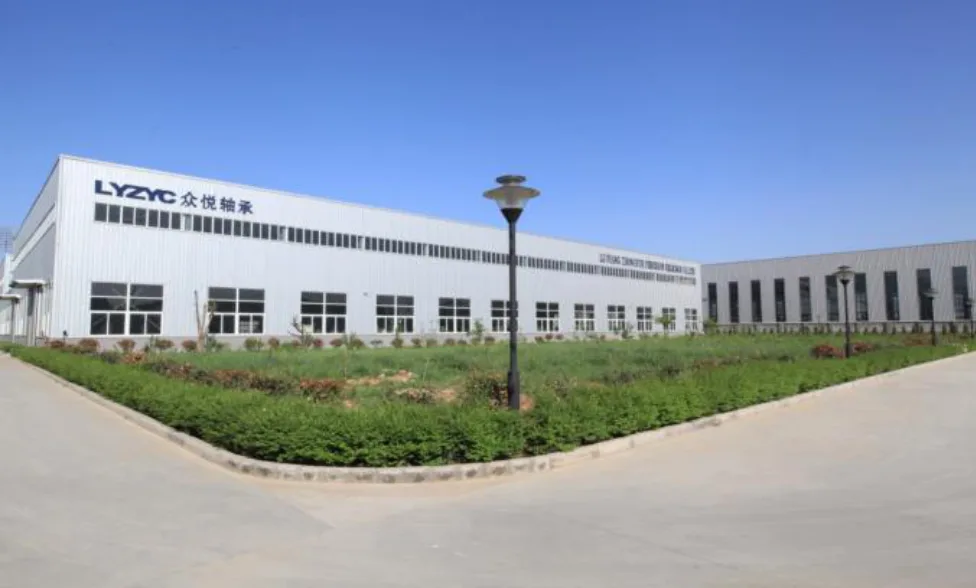
The Zhongyue plant
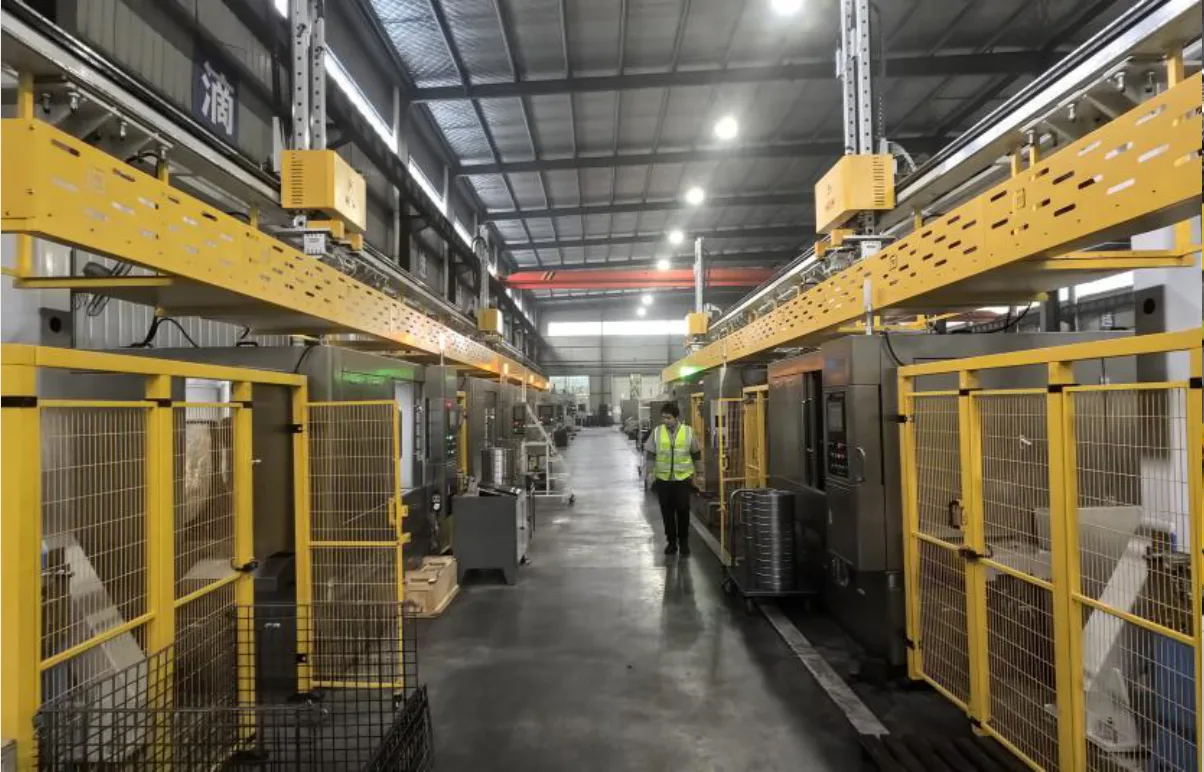
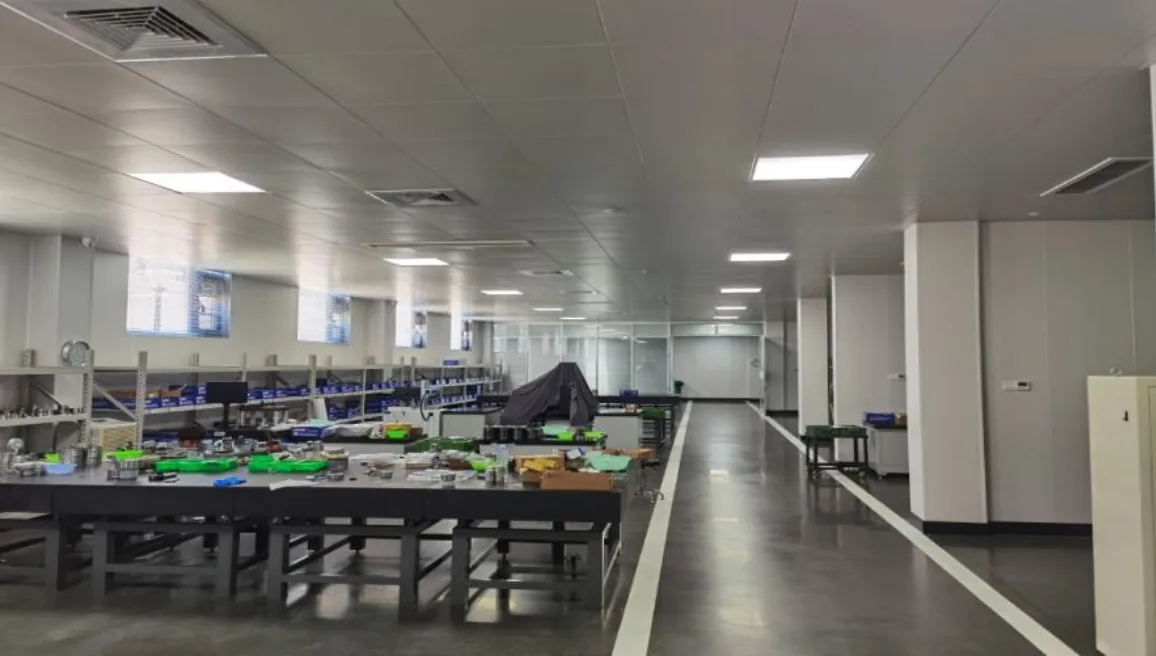
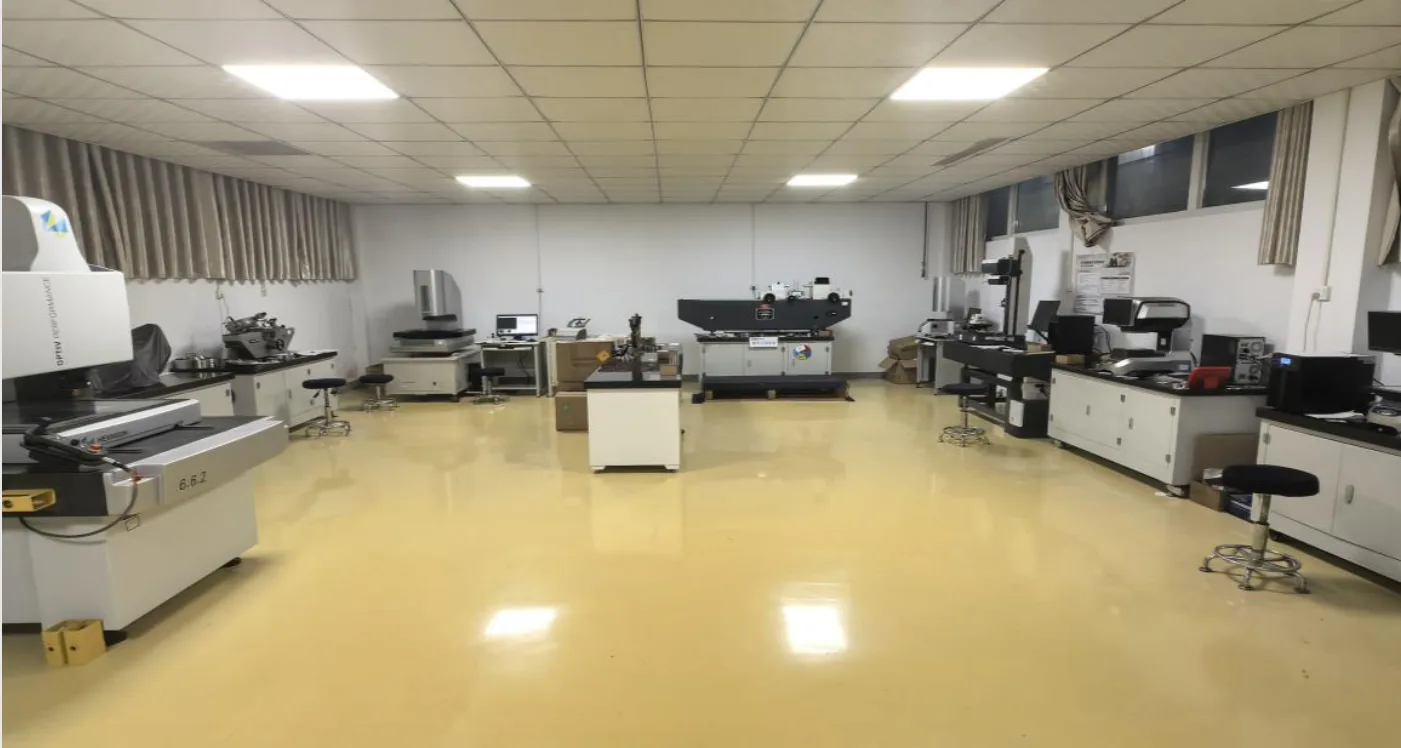
Zhongyue runs two campuses, over 46,000 m² in total, with 30,000+ m² of workshops and offices, 150+ people, 400+ bearing machines, and 500+ inspection instruments.

Machines, metrology, and materials
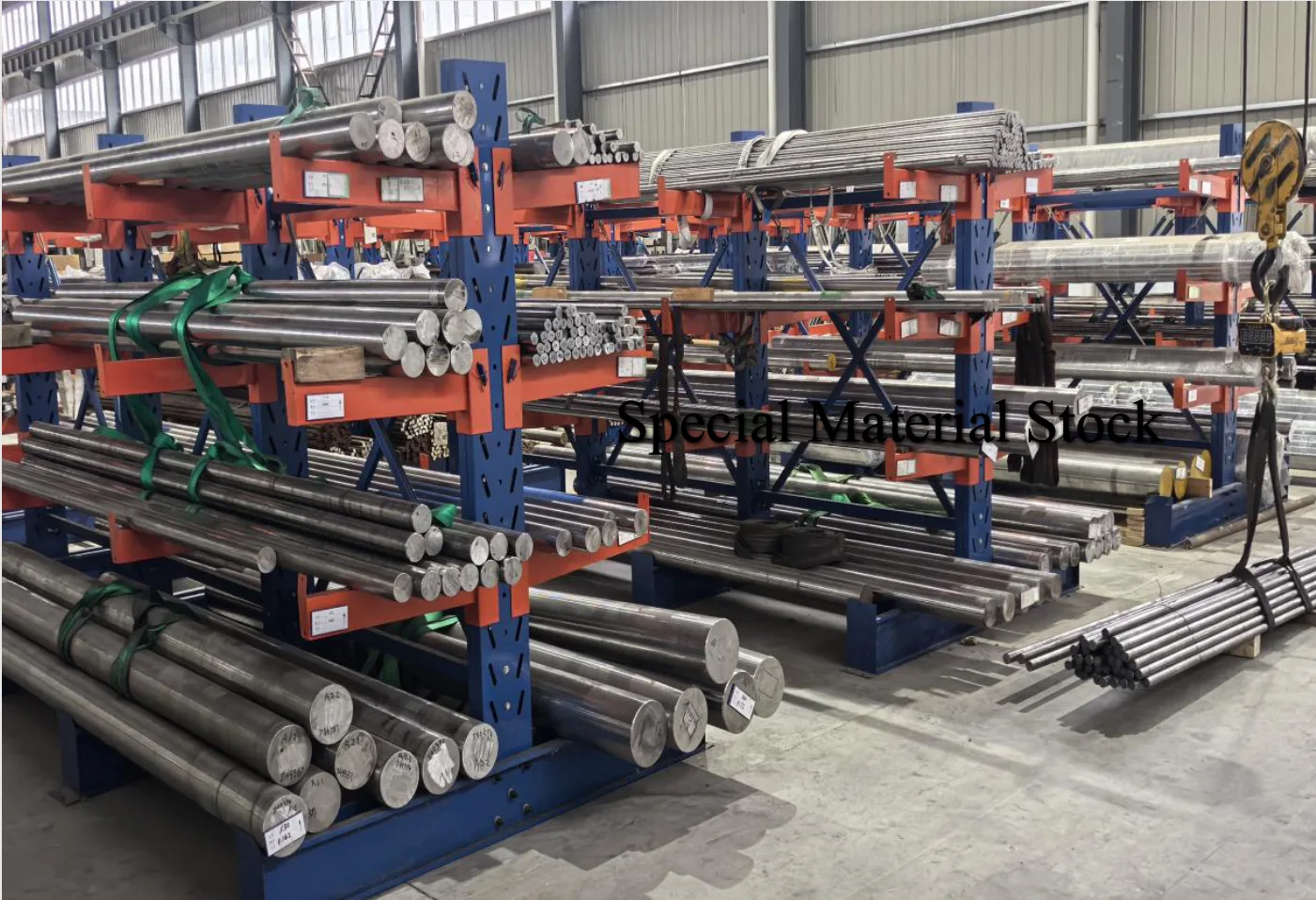
Special-material stock includes bearing steel ZGCr15, stainless 9Cr18 and 9Cr18Mo, high-nitrogen stainless X30 and X40N, and high-temperature steel M50. Heat treatment includes vacuum quenching and a cryogenic treatment step at −196°C. That step is part of manufacture, not a running-temperature rating.