
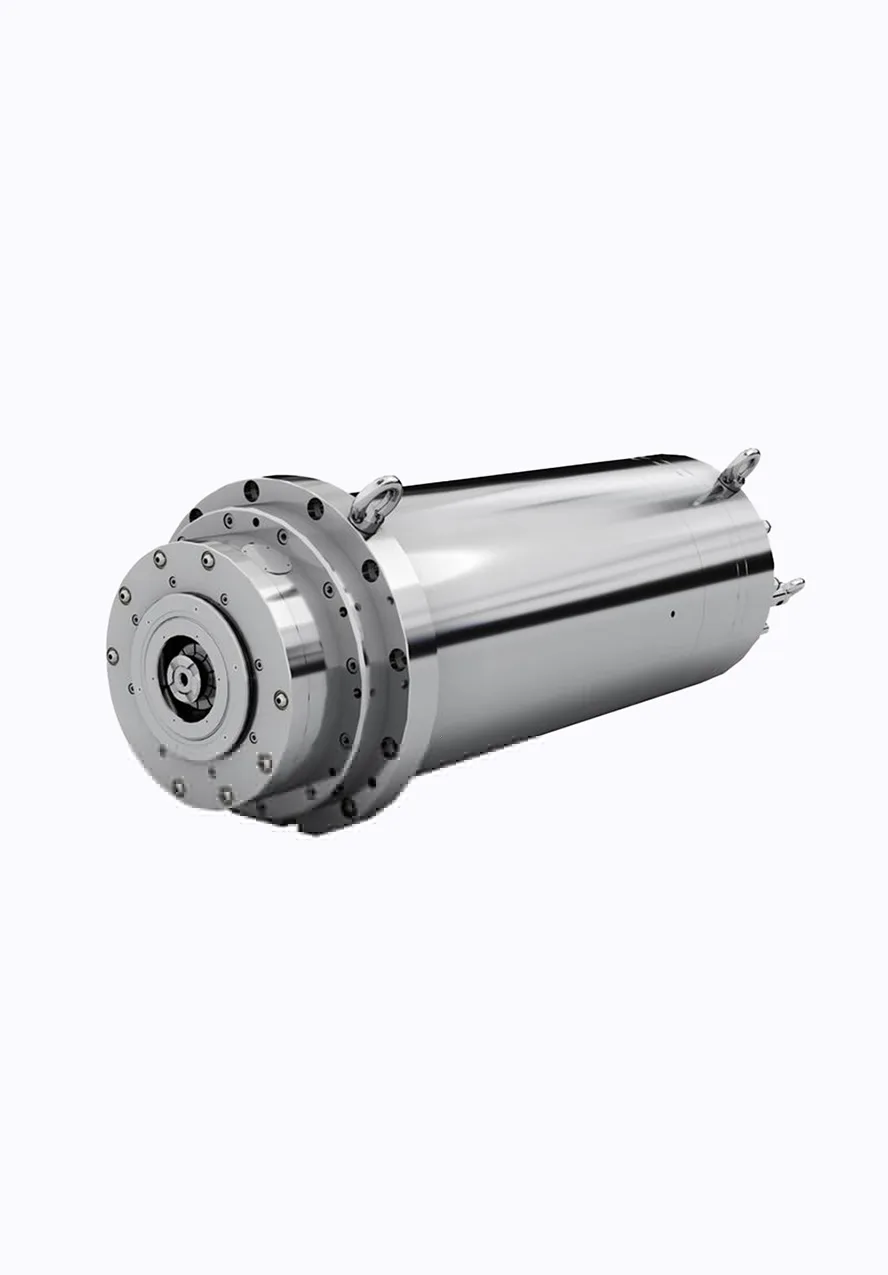
China's domestic electric spindle industry has reached a significant milestone in 2026, with the market valued at approximately 5.68 billion yuan and a domestic substitution rate approaching 49%. This reflects sustained progress in closing the technology gap with international competitors while building a robust domestic supply chain for precision CNC machine tool components.
Market Scale and Structure
The 5.68 billion yuan market encompasses motorized spindles for machining centers, grinding machines, turning centers, and specialty applications. The market has grown at approximately 8-10% annually over the past three years, outpacing the global average, driven by China's massive machine tool production base ?the world's largest by output volume. Domestic manufacturers now serve mid-range CNC machine tool builders, while foreign brands (primarily German, Swiss, and Japanese) still dominate the ultra-high-end segment for five-axis machines and sub-micron accuracy applications.
Domestic Substitution Progress
The 49% domestic substitution rate represents a significant increase from approximately 35% just five years ago. Key factors driving this trend include government policy support under the "Made in China 2025" initiative, which prioritized CNC machine tool components as a strategic sector, and the establishment of specialized industrial clusters in Luoyang, Dalian, and the Yangtze River Delta region. Domestic manufacturers now reliably supply spindles for three-axis and four-axis machining centers, with growing penetration into the five-axis segment where domestic share has reached approximately 20%.
Ultra-High-Speed Breakthroughs
A notable technical achievement has been the successful development and commercialization of ultra-high-speed spindles incorporating ceramic hybrid bearings. Domestic manufacturers, including Luoyang Songju, now produce spindles rated up to 120,000 RPM for internal grinding and precision drilling applications ?a speed range previously accessible only from a small number of European and Japanese suppliers. These spindles leverage domestically sourced P2-grade angular contact bearings with silicon nitride balls, oil-air lubrication systems, and precision-balanced rotor assemblies manufactured to G0.4 balance grade.
Research institutions including several key universities in Luoyang and Harbin have partnered with industry to advance bearing steel quality, ceramic ball manufacturing consistency, and spindle thermal modeling ?all critical for reliable high-speed operation. The next frontier is achieving comparable reliability and service life to the best international products, where domestic spindles still lag in mean-time-between-failure (MTBF) statistics for continuous production environments.
Remaining Challenges
Despite rapid progress, several gaps persist. The availability of P2-grade precision bearings from domestic sources remains limited ?most ultra-high-speed spindles still use imported bearings for the front support position. Sensor integration for Industry 4.0 smart spindle applications is nascent compared to mature offerings from European competitors. And brand perception among international OEMs remains a barrier ?Chinese spindle manufacturers must consistently demonstrate reliability over multi-year production cycles to win Tier-1 machine tool builder confidence.
Luoyang Songju: Driving Domestic Spindle Innovation
Based in Luoyang ?one of China's historic bearing and precision manufacturing hubs ?Luoyang Songju is at the forefront of domestic electric spindle development. Our spindles range from 0.5 kW grinding spindles to 100 kW machining center spindles, with speeds up to 120,000 RPM. We combine domestically manufactured high-precision components with select imported bearings where required, offering customers the optimal balance of performance and value. Our ISO 9001:2015 certified facility and rigorous testing protocols ensure every spindle meets international quality standards.
The trajectory of China's domestic electric spindle industry is unmistakably upward. With continued investment in bearing technology, motor design, and reliability engineering, the domestic substitution rate is projected to exceed 60% by 2028. For international buyers, Chinese spindles increasingly represent a compelling value proposition ?combining competitive pricing with technical capability that meets the requirements of most industrial CNC applications.